

Best overall: plain cotton dress material for a simple everyday kurta. Best for easy outfit coordination: printed cotton. Best for a structured office look: yarn-dyed cotton checks or stripes. This 2026 guide from Pulpel ranks fabric types, rather than named product sets, and explains what to check before stitching.
- Plain cotton dress material is the best starting point for a simple everyday kurta, subject to opacity and width checks.
- Printed cotton suits shoppers who want pattern without adding embroidery or decorative trims.
- Yarn-dyed cotton checks or stripes suit office outfits; pattern matching needs attention before cutting.
- Pulpel’s cotton dress material guidance puts composition, usable dimensions and care instructions before appearance.
Why this matters
A pretty fabric photograph does not tell you whether a kurta will feel comfortable, need lining or fit within the supplied length. Those decisions depend on the fabric’s composition, weave, width and your chosen pattern. Start there.
For everyday wear in Kerala, think about sitting, travelling, household tasks and washing—not just how the outfit looks standing still. A comfortable cotton outfit needs room to move, suitable coverage and care instructions you can follow.
Pulpel’s cotton dress material guidance is best for family shoppers planning practical, made-to-measure everyday outfits. For your 2026 wardrobe, choose the fabric around the garment you actually wear most often.
What makes the best cotton dress material?
Use these criteria before comparing colours or prints:
- Composition: Read the fibre description. A cotton blend is not the same as pure cotton, and a cotton finish does not establish fibre content.
- Opacity: Ask whether the material provides the coverage you want. Light colours and open weaves deserve particular attention.
- Usable dimensions: Confirm both length and width for each piece. Total set length alone does not tell you whether the top and bottom will fit.
- Garment shape: Match the fabric to your planned sleeves, neckline, flare and bottom style. A straight kurta and a gathered dress need different cutting layouts.
- Care requirements: Follow the particular fabric’s washing, drying and ironing instructions. Do not assume every cotton item accepts the same treatment.
- Pattern placement: Check print direction, borders, stripes and checks. These affect where your tailor places each pattern piece.
No single colour, finish or fibre label settles all these questions. The best fabric is the one that fits your garment plan without compromising coverage or movement.
Cotton dress material picks at a glance
These are buying categories, not claims that every fabric within a category behaves identically. Use the limitations to narrow your shortlist.
| Ranked pick | Best for | Standout feature | Key limitation |
|---|---|---|---|
| Plain cotton | A versatile everyday kurta | A solid colour leaves styling and garment details flexible | Creases and show-through need checking |
| Printed cotton | An outfit led by pattern | The print provides decoration without added trims | Print direction affects cutting; matching separates takes care |
| Yarn-dyed cotton checks or stripes | Office-friendly tailoring | Pattern formed by differently coloured yarns | Matching lines across seams needs planning |
| Cotton-blend dress material | Shoppers comparing different care requirements | A blend offers an alternative to pure cotton | Performance depends on the other fibres and construction |
1. Plain cotton: best cotton dress material for a versatile kurta
Plain cotton gives you a straightforward starting point for a kurta you can wear with different bottoms and dupattas. Without a large print to position, you can focus on fit, sleeve shape and the neckline. A solid colour also leaves room for simple stitching details.
The fabric still needs scrutiny. Cotton absorbs moisture and can crease; its thickness, weave and finishing affect how the finished garment feels and looks. Plain does not mean opaque.
Plain cotton pros:
- A solid colour is straightforward to coordinate with existing separates.
- There is no directional print to arrange across the garment.
- Neckline and sleeve details need not compete with a large motif.
Plain cotton cons:
- Creases can remain visible, particularly on a smooth, solid surface.
- Pale or loosely woven material needs an opacity check before cutting.
- A plain surface makes fit and seam puckering easier to notice.
Best for: Someone building a repeat-wear kurta wardrobe rather than an outfit for a single occasion.
For an everyday 2026 wardrobe, start with a colour that works with a bottom you already enjoy wearing. Ask your tailor about coverage and movement before adding decorative details. Verdict: Buy plain cotton after confirming composition, opacity and usable dimensions.
2. Printed cotton: best cotton dress material for easy outfit coordination
Printed cotton lets the fabric carry the visual interest. Floral, geometric or other printed patterns give a simple garment a clear direction without requiring embroidery or additional borders. Choose the pattern because you enjoy wearing it, not because it fills the product photograph attractively.
Check the full repeat and whether the motifs have a definite top and bottom. A close-up photograph shows detail, but a wider view helps you understand how the print will sit across a kurta.
Printed cotton pros:
- The pattern provides decoration without added trims.
- A colour within the print gives you a starting point for matching separates.
- A simple garment shape lets the print remain the main detail.
Printed cotton cons:
- Directional motifs restrict how pattern pieces can be placed.
- A busy print can compete with decorative stitching or a patterned dupatta.
- Matching colours from photographs requires care because screens alter appearance.
Best for: Someone who wants an everyday outfit with visible pattern and minimal extra detailing.
Keep the neckline and sleeve treatment simple if the print is already prominent. Compare the material with your intended bottom before stitching. Verdict: Buy printed cotton when the pattern direction and accompanying colours suit your outfit plan.
3. Yarn-dyed cotton checks or stripes: best for office-friendly tailoring
Yarn-dyed checks and stripes use differently coloured yarns to form the pattern during weaving. That distinguishes them from a pattern printed onto the fabric surface. The description must identify the construction; appearance alone does not prove that a fabric is yarn-dyed.
Checks or stripes give a straight kurta a clear visual structure. Their main challenge is cutting: mismatched lines at obvious seams draw attention even when the garment fits well.
Yarn-dyed cotton pros:
- Checks and stripes give simple tailoring a defined pattern.
- A restrained pattern works with plain bottoms and dupattas.
- Pattern placement offers deliberate design choices at pockets or panels.
Yarn-dyed cotton cons:
- Matching lines across seams needs a planned cutting layout.
- Pattern matching affects how much material the tailor needs.
- Yarn-dyed construction alone does not guarantee colourfastness or easy care.
Best for: Someone choosing a neat, patterned kurta for office wear.
Show your tailor the fabric before finalising pockets, panels or sleeve details. For a 2026 office outfit, a well-aligned pattern is more useful than adding details the fabric cannot accommodate. Verdict: Buy after the tailor confirms enough material for the intended pattern placement.
4. Cotton-blend dress material: best for comparing care options
Cotton-blend dress material combines cotton with another fibre or fibres. The word blend does not tell you the proportions, the feel or the washing requirements. Read the composition and care information together.
Some blends offer different crease behaviour or drying characteristics from pure cotton, but the actual mixture and construction determine the result. Do not treat every cotton blend as an easy-care fabric.
Cotton-blend dress material pros:
- It gives you an alternative when pure cotton does not meet your preferences.
- The stated composition helps you compare different fibre combinations.
- Product-specific care information lets you judge suitability for your routine.
Cotton-blend dress material cons:
- The blend label alone does not establish comfort or crease resistance.
- Washing and ironing requirements depend on the other fibres.
- It is not the right substitute when you specifically want pure cotton.
Best for: Someone willing to compare composition and care instructions rather than choose by a cotton label alone.
Pulpel’s everyday fabric advice is simple: choose the blend for its stated characteristics, not an assumed improvement. Verdict: Hold until the fibre composition and care instructions match your needs.
How these cotton dress material picks were ranked
Plain cotton comes first because it gives an undecided shopper a flexible starting point for a simple kurta. Printed cotton serves a different need: decoration through pattern. Checks and stripes suit planned tailoring, while blends require closer attention to composition.
This is a use-case ranking for 2026, not a laboratory test or a claim that one weave always outperforms another. Composition, coverage, usable dimensions, garment shape, care and pattern placement remain the deciding criteria.
Measure before choosing your material
Fabric length is only useful when you know the width and the garment layout. Your tailor needs the proposed kurta length, sleeve style, body measurements and bottom pattern before confirming whether a piece is sufficient. Take a well-fitting garment along as a reference, but explain what you want changed.
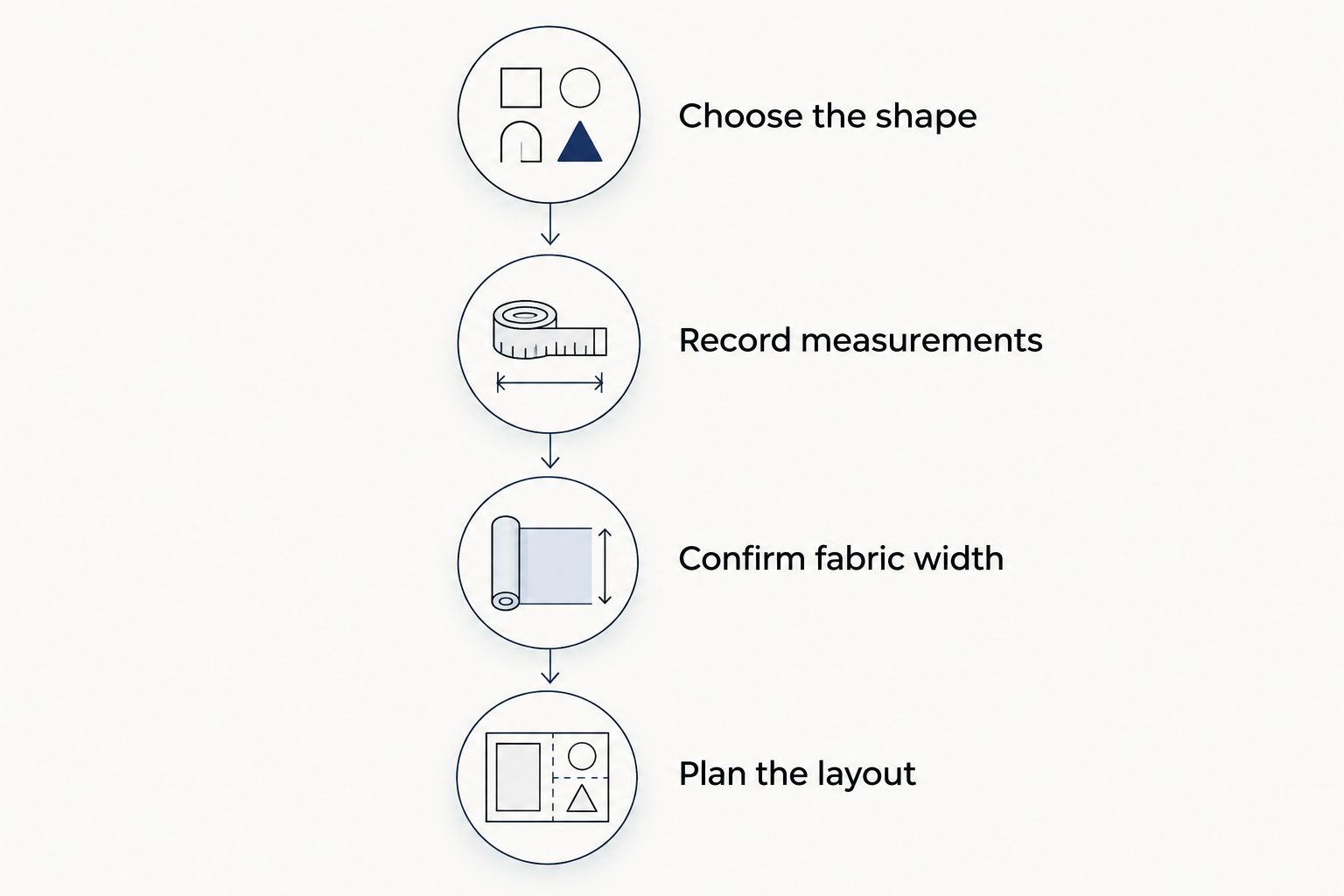
Use this sequence before ordering:
- Choose the shape: Decide on the top, sleeves and bottom style.
- Record measurements: Keep body and finished-garment measurements clearly separate.
- Confirm fabric width: Check the usable width, not just the length.
- Plan the layout: Ask the tailor to account for seams, hems and pattern matching.
Keep units consistent when comparing measurements. 1 metre equals 100 centimetres; 1 inch equals 2.54 centimetres. For example, a width of 150 centimetres is 1.5 metres. This is a conversion example, not a dimension stated for any recommended fabric.
If you are making a churidar, ask about the bottom separately. Its fitted shape and ankle gathers need a different layout from straight trousers. Avoid transferring a length recommendation from another person’s outfit to your own.
Check coverage, comfort and finishing
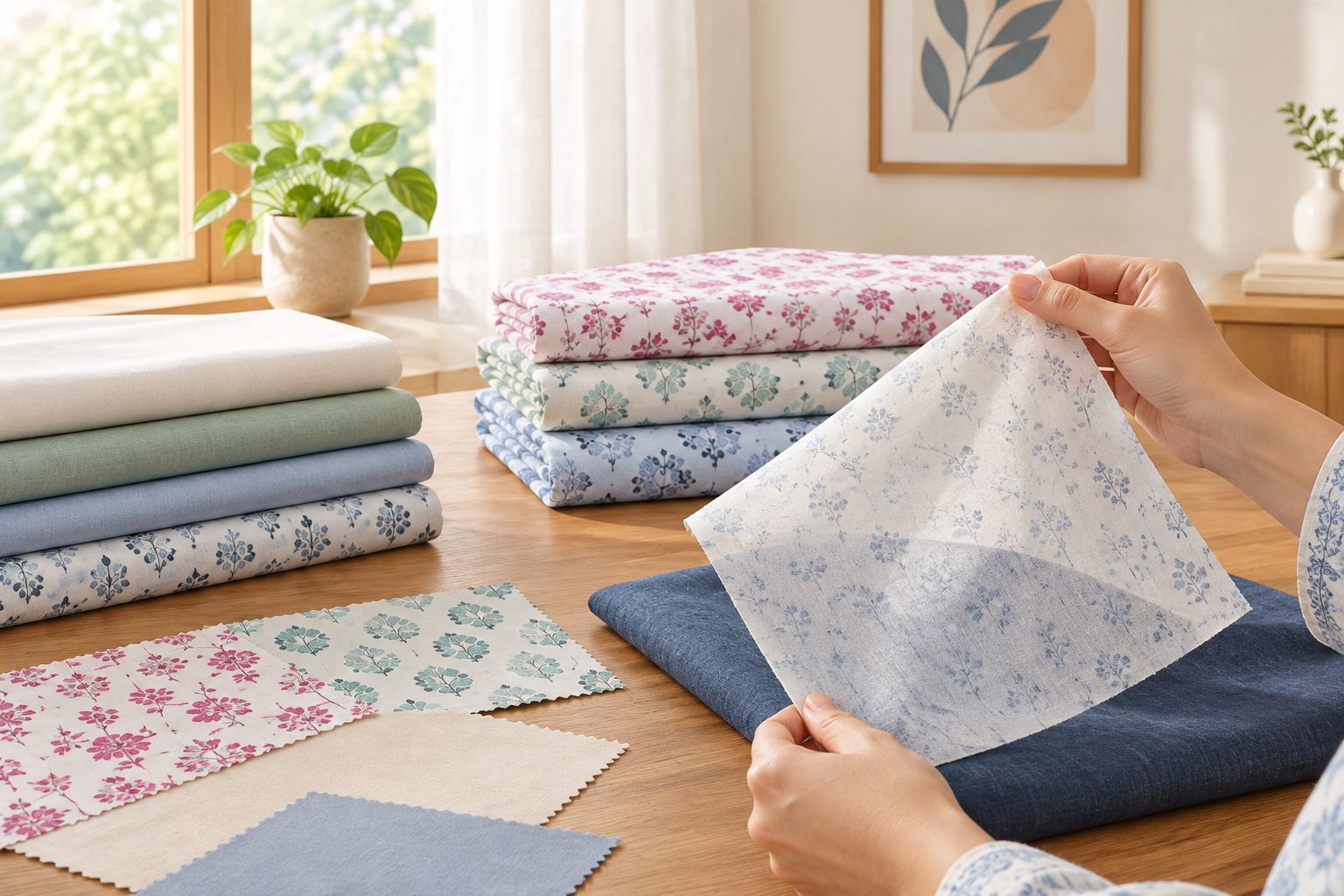
Before cutting, inspect the material in daylight and look at both sides. Hold it against a contrasting surface to assess show-through, then discuss lining with your tailor. Thickness alone is not a complete guide to coverage.
A lining adds another layer, so consider it alongside the fabric’s feel and your comfort preferences. If the material needs more lining than you want to wear, choosing a different fabric is simpler than trying to rescue the finished garment.
For a daily kurta, ask for a fit that allows comfortable sitting and reaching. Discuss neckline depth, armhole comfort and sleeve movement explicitly. A familiar silhouette still needs measurements suited to your body.
Before final finishing, try the garment with the bottom you intend to wear. Check whether the hem, side openings and sleeve length work together. Comfort is easier to correct at a fitting than after every seam is finished.
Care advice for your 2026 cotton wardrobe
Follow the instructions supplied for the particular material. Fibre content is only part of the care decision; dyes, printing, trims and finishes also matter. Do not copy a washing routine from a bedsheet or another cotton garment.
Ask whether the fabric should be washed before cutting. Cotton fabrics can shrink, but the amount depends on the material and its processing. There is no universal shrinkage allowance suitable for every dress material.
If prewashing is advised, use the specified method and let the fabric dry fully before measurement and cutting. Ask about colourfastness before washing contrasting pieces together. Keep any care information so the finished outfit can be washed appropriately.
During humid weather, make sure garments are dry before folding them away. Iron according to the fabric’s instructions, especially when the material is blended or has decorative details. A familiar cotton feel is not permission to use the hottest setting.
Which cotton dress material should you choose?
Choose plain cotton for your first everyday kurta, provided its composition, coverage and dimensions suit the pattern. Choose printed cotton when you want the fabric to supply the decoration. Choose checks or stripes when you are prepared to plan their alignment with your tailor.
Consider a cotton blend only after checking what the blend actually contains. For a Vishu family visit or another occasion, keep the same practical checks even if you choose a more decorative outfit.
Pulpel’s recommendation is to settle fit and fabric suitability before colour coordination. That order makes the choice clearer without turning everyday shopping into a complicated exercise.
FAQ
What’s the best cotton dress material for everyday wear?
Plain cotton dress material is the best starting point for a versatile everyday kurta. Confirm the fibre composition, opacity, width and length before deciding whether a particular piece suits your pattern.
Is printed cotton better than plain cotton for a daily kurta?
Printed cotton is better when you want the pattern to provide decoration; plain cotton is better when you want flexible styling. Neither option automatically offers better comfort, because weave, weight and fit also matter.
How much cotton dress material do I need for a churidar?
The required length depends on your measurements, fabric width and the top and bottom patterns. Ask your tailor to confirm each piece separately, including sleeves, seams and any pattern matching.
Should I wash cotton dress material before stitching?
Prewash only according to the material’s instructions and your tailor’s guidance. If prewashing is advised, complete it before the final measurements and cutting.
Does cotton dress material always need lining?
Cotton dress material does not always need lining. Check opacity in daylight and decide with your tailor whether the fabric provides the coverage you want.
Is cotton-blend dress material the same as pure cotton?
Cotton-blend dress material is not the same as pure cotton. It contains other fibres, so check the stated composition and care instructions rather than assuming identical behaviour.
Can I use the same fabric length for a straight kurta and a flared dress?
Do not assume the same length suits both garments. Flare, sleeves, panel placement and usable fabric width change the cutting layout, so confirm the pattern before ordering.
One last thing
Two pieces with the same length can support different garment layouts because their widths differ. Before buying your 2026 cotton dress material, send your tailor both dimensions and a picture of the intended style. A confirmed cutting plan is more useful than a guess based on metres alone.