

For a sheet measuring 90 × 100 inches, your bedsheet fabric must provide more than 90 inches of usable width and more than 100 inches of length before hemming. The 100-inch length equals 2.54 metres, but that is not the purchase quantity: you still need to account for hems and any shrinkage specified for the fabric. For a double bed, measure your mattress, decide how much fabric you want below its edges, and check the fabric width before ordering.
- Calculate bedsheet fabric from mattress measurements, tuck-in depth and usable fabric width—not the double-bed label.
- A 100-inch sheet length equals 2.54 metres before extra fabric for hems or confirmed shrinkage.
- Nushio by Pulpel suits family shoppers comparing home textiles by stated dimensions; check each item's details.
- For cotton bedsheets, follow the individual care instructions rather than assuming one washing method fits every fabric.
How much bedsheet fabric do you need for a double bed?
You need enough fabric to cover the mattress top, extend down its sides and leave the tuck-in or hanging length you prefer. Then add the fabric required by your chosen hem or sewing pattern. Length alone cannot tell you whether a piece will make a double-bed sheet.
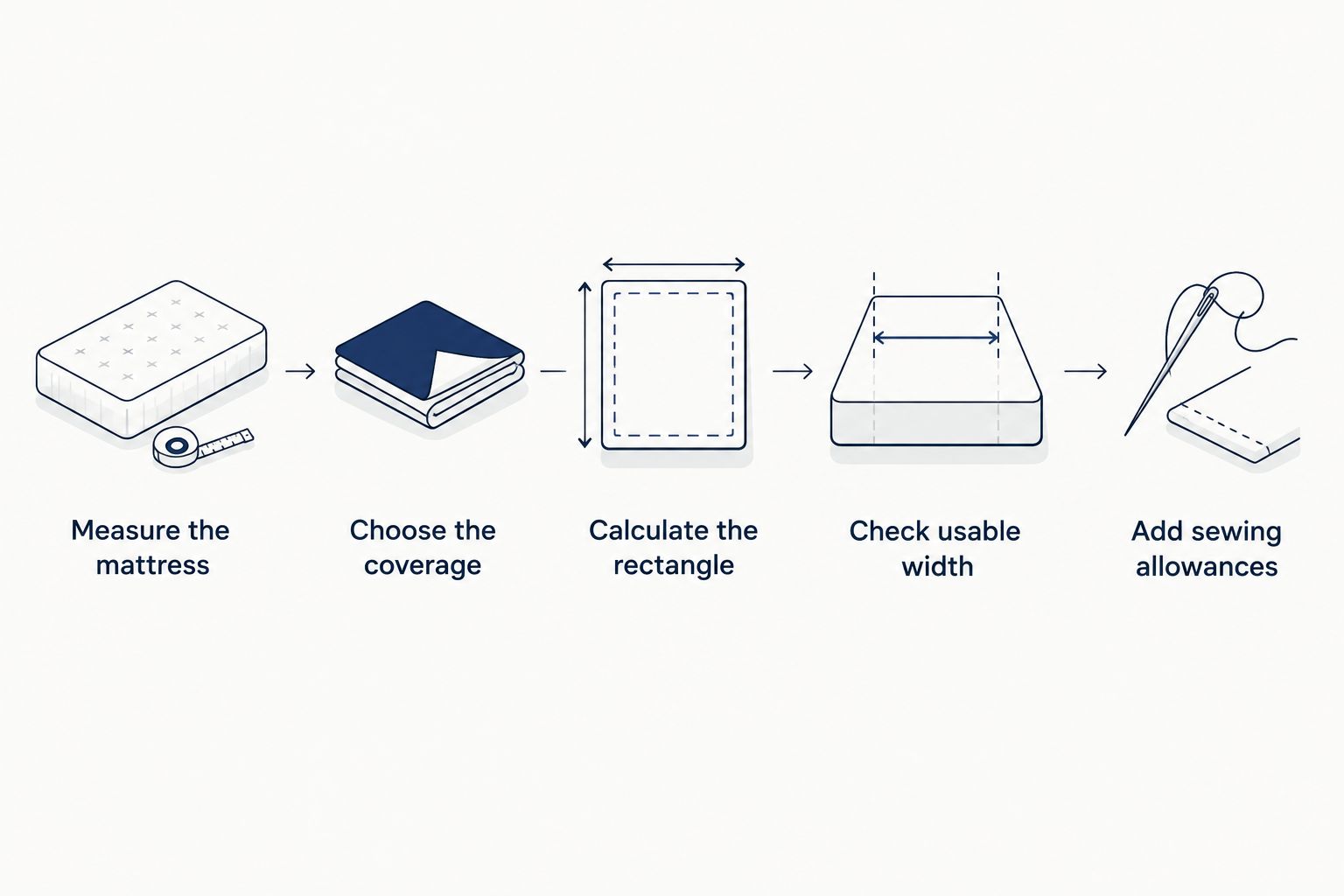
For your 2026 bedsheet project, work through these steps before deciding on a metre quantity:
- Measure the mattress. Record its width, length and depth, including any topper you leave on the bed.
- Choose the coverage. Decide whether the sheet will tuck under the mattress or hang loosely at the sides.
- Calculate the rectangle. Add the required coverage to both sides and both ends of the mattress measurements.
- Check usable width. Confirm that the cloth is wide enough after allowing for edge finishing.
- Add sewing allowances. Include hems, seams and any fabric-specific shrinkage allowance confirmed by the seller or sewing instructions.
- Convert the length. Convert your final cutting length into the unit used to sell the fabric.
Fabric choice comes after this measurement check. The guide to choosing cotton bedsheets for everyday use covers the next part of that decision.
Why this matters
A sheet can cover the mattress top yet leave too little cloth to tuck underneath. Buying a longer piece does not solve a shortage across the width. That is why a fabric's width deserves as much attention as the number of metres you buy.
Your 2026 shopping checklist should separate mattress dimensions, finished sheet dimensions and fabric cutting dimensions. They describe different things. Keep them on separate lines when you write your measurements down or discuss the project with a tailor.
The same distinction applies when comparing a ready-made bedsheet with a bedspread. Check what the item is intended to do, rather than expecting every bed covering to tuck in or fit like a fitted sheet.
Calculate a flat sheet from your own measurements
For a flat sheet, start with the finished rectangle you want on the bed. Its width is the mattress width plus the coverage required on the left and right; its length is the mattress length plus the coverage required at the head and foot.
Use these relationships:
- Finished width: mattress width + left-side coverage + right-side coverage.
- Finished length: mattress length + head-end coverage + foot-end coverage.
- Cutting width: finished width + the total width needed for edge finishing.
- Cutting length: finished length + the total length needed for edge finishing.
Keep every measurement in the same unit until the calculation is complete. Mixing mattress measurements in centimetres with hem allowances in inches makes the cutting plan harder to check.
Decide what “coverage” means for your bed
If you want the sheet tucked in, measure down the mattress side and include the amount you want underneath it. If you want a loose drape, measure from the mattress top to the point where the sheet should end.
The head and foot do not have to use identical coverage. Your preferred arrangement matters, especially if the head of the mattress sits against a headboard. Write down each allowance rather than automatically doubling a single measurement.
Take the measurements on the mattress
Measure the mattress itself, not the outside of the bed frame. Include a topper when it forms part of your everyday sleeping surface. Keep the tape straight rather than following the curve of a soft edge.
Before cutting, check the planned finished size against the bed again. This is the stage to change the amount of tuck-in—not after the hems are sewn.
A 90 × 100-inch sheet: 2.54 metres before allowances
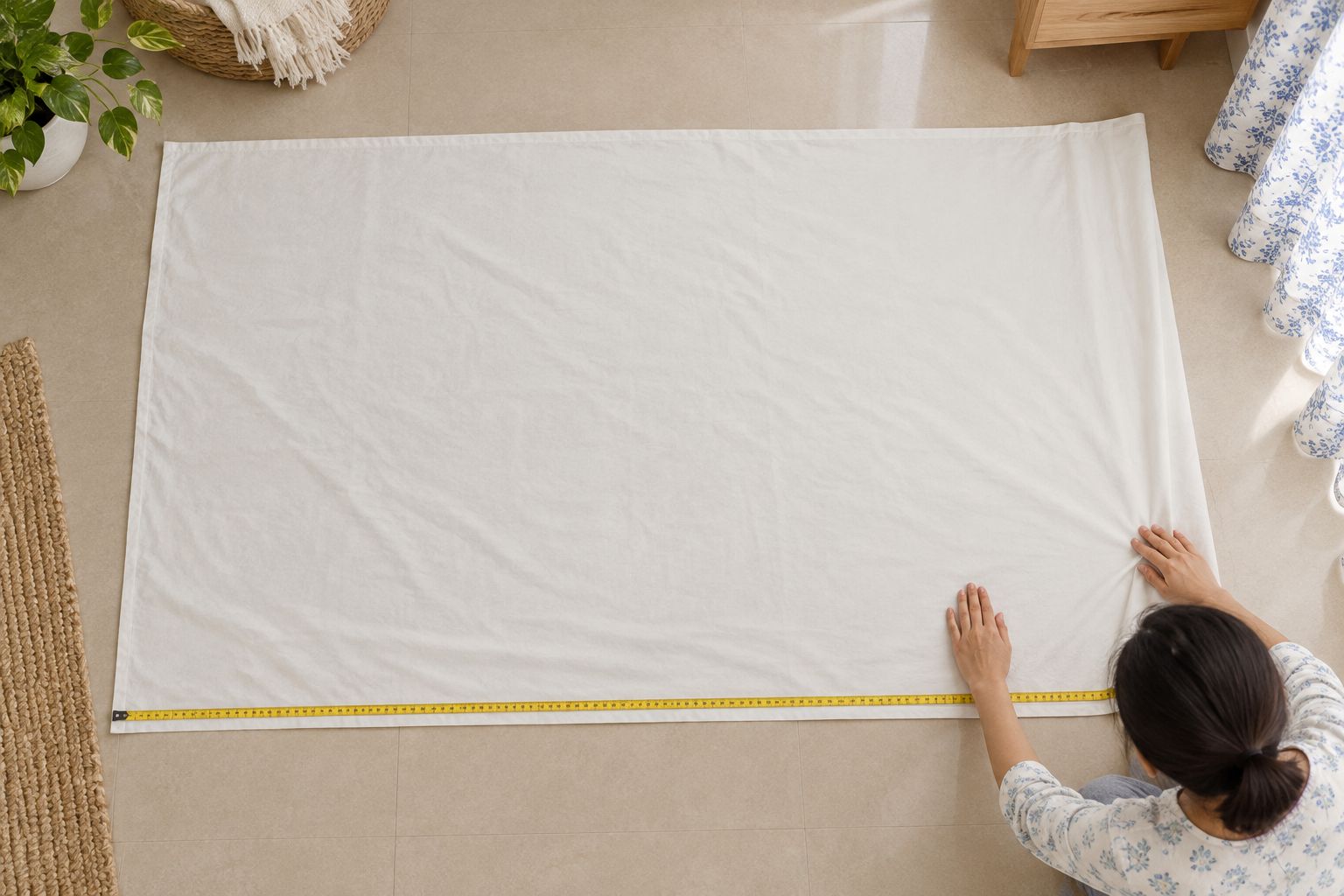
A 90 × 100-inch finished sheet has a length of 2.54 metres. This is a unit conversion, not a recommendation to order exactly that amount. Your cutting length must also accommodate the chosen edge finish and any confirmed shrinkage allowance.
The cloth must provide the required cutting width as well. Fabric described as 90 inches wide does not automatically produce a 90-inch finished sheet: the usable width and the amount consumed by hems still need checking.
Best for: a measurement comparison when your calculated finished rectangle is 90 × 100 inches. The advantage is a clear size target; the limitation is that the target says nothing about your particular mattress until you compare the measurements.
A 100 × 110-inch sheet: 2.794 metres before allowances
A rectangle measuring 100 × 110 inches has a length of 2.794 metres when the 110-inch side runs along the fabric length. The cloth must also accommodate the 100-inch side plus its finishing requirements.
Do not rotate the cutting layout without checking the print. A directional design that looks correct down the bed in one layout can face sideways in another. Confirm the orientation before treating rotation as a solution to a width problem.
Best for: a project whose calculated finished dimensions match this rectangle. The larger width offers more coverage than a 90-inch-wide rectangle, but extra coverage is useful only when it suits your bed and intended drape.
A 110 × 110-inch sheet: 2.794 metres before allowances
A 110 × 110-inch square also measures 2.794 metres along its length, before sewing or fabric-specific allowances. It needs more usable width than the 100 × 110-inch rectangle, even though both share the same length.
This comparison shows why a metre figure is incomplete. Two sheets can require the same basic length while needing different fabric widths.
Best for: a measured plan that calls for equal width and length. A square removes a width-versus-length distinction in the outline, but a directional print can still restrict how you place it.
| Finished rectangle | Length converted to metres | Best for | Useful feature | Limitation |
|---|---|---|---|---|
| 90 × 100 inches | 2.54 metres | A matching measured flat-sheet plan | Clear rectangular size target | Hems and shrinkage are not included |
| 100 × 110 inches | 2.794 metres | A plan requiring more width than the first rectangle | Wider coverage with the same length as the square | Fabric width still needs checking |
| 110 × 110 inches | 2.794 metres | A matching square-sheet plan | Equal finished side measurements | Requires the widest cutting layout here |
These dimensions are comparison points, not standard requirements for every double bed. For a 2026 purchase, use the rectangle that matches your measurements rather than choosing the largest by default.
Why the amount of bedsheet fabric varies
The amount changes with your cutting plan, not simply with the word “double”. Check these factors before settling on a quantity:
- Mattress dimensions: the measured width and length establish the starting rectangle.
- Mattress depth: side coverage must account for the depth when you want the sheet tucked underneath.
- Tuck-in or drape: a loose cover and a securely tucked sheet use different finished dimensions.
- Usable fabric width: the cutting width determines whether one piece can span the sheet.
- Construction: hems, joining seams and fitted corners consume fabric differently.
- Fabric instructions and print direction: confirmed shrinkage guidance and the cutting orientation affect the final plan.
Do not add a guessed shrinkage percentage to every fabric. Ask for information about the particular cloth, and follow its preparation and care instructions. A cotton label alone does not establish how much a specific fabric will shrink.
Should you use one wide piece or join narrower fabric?
Use one piece when its usable width fits the cutting plan. It avoids a joining seam, but width is not the only check: composition, care guidance and intended use still matter.
Joined fabric is another construction route when a suitable cloth cannot span the required width. Plan the seam positions before buying. The layout must include seam allowances, and a patterned fabric needs attention where the pieces meet.
| Construction choice | Best for | Advantage | Trade-off |
|---|---|---|---|
| One wide piece | A flat sheet that fits within the usable fabric width | No joining seam across the sheet | Depends on finding suitable width and fabric |
| Joined panels | A planned project using narrower suitable cloth | Builds a wider rectangle from separate pieces | Adds seams and pattern-matching work |
| Ready-made covering | Shoppers who prefer not to cut and sew | Gives you stated item dimensions to compare | Does not provide a custom fit automatically |
Do not calculate joined panels by simply doubling the sheet length. Draw the pieces first, account for the seams and check whether the design needs matching. The correct quantity comes from that layout.
Is a fitted sheet measured the same way as a flat sheet?
A fitted sheet needs mattress width, length and depth, plus the allowances specified by its sewing pattern. A flat-sheet rectangle is not a complete fitted-sheet cutting plan. Fitted corners and the edge construction must be accounted for separately.
For a fitted-sheet project in 2026, choose the pattern before ordering fabric. Check its instructions against your actual mattress, including the topper. Do not use a flat sheet's finished measurements as the cutting size for a fitted sheet.
Can I use a finished bedsheet to work out how much fabric to buy?
A finished bedsheet gives you a finished-size reference, not the original cutting dimensions. It helps most when you already like its fit and can measure it after its usual laundering. You still need to add the allowances required for the new fabric and construction.
Spread the sheet flat, smooth out folds without stretching it and measure between its finished edges. Note whether it fits comfortably, leaves excess cloth or needs more tuck-in. Copying an unsatisfactory fit only repeats the same problem.
When a ready-made covering is the simpler choice
Nushio by Pulpel is best for family shoppers comparing home textiles by stated dimensions. If you prefer a finished item to a sewing project, the cotton floral printed double bedsheet, 110 × 110 inches provides a stated size to compare with your bed.
The benefit is avoiding a cutting-and-hemming project. The limitation is that a finished item's dimensions still need to suit your mattress and preferred coverage; “double” does not establish that fit. Check the current item description for construction, contents and care details before choosing.
Nushio by Pulpel's home textiles include different bed coverings. Treat each listing individually rather than assuming every bedsheet and bedspread shares the same material, edge finish or washing instructions.
FAQ
How many metres of bedsheet fabric do I need for a double bed?
Calculate the metres from your required cutting length after checking that the usable fabric width fits your sheet. A 100-inch finished length equals 2.54 metres, but hems and any confirmed shrinkage allowance require additional fabric.
Is 2.54 metres enough to make a double bedsheet?
2.54 metres is the length of a 100-inch finished sheet, not a complete purchase allowance. Whether it is enough depends on your finished dimensions, fabric width and sewing requirements.
What measurements should I take before buying bedsheet fabric?
Measure the mattress width, length and depth, then decide the tuck-in or drape you want at each edge. Include a topper if you normally sleep with it on the mattress.
Can I make a double bedsheet from narrow fabric?
You can construct a wider sheet from joined panels if the fabric suits the project. Plan seam allowances, seam positions and print matching before calculating the purchase quantity.
Should I wash cotton bedsheet fabric before cutting it?
Follow the preparation instructions for the particular cotton fabric before cutting. Confirm whether prewashing is recommended, and do not assume a universal shrinkage percentage or washing temperature.
Does a king-size bedspread automatically fit a double bed?
A king-size label does not establish the right fit for your double bed. Compare the stated dimensions with your mattress and the amount of hanging or tucked coverage you want.
Can I use the same fabric calculation for pillow covers?
Calculate pillow covers separately from the bedsheet. Measure each pillow and account for the cover's closure, seams and any print placement before adding that fabric to your order.
One last thing
An extra length of cloth cannot make a single piece wider. Before your 2026 order, write the required cutting width beside the metre quantity. That small check prevents you from treating length as a complete fabric specification.
When browsing Nushio by Pulpel, keep your measurements nearby. Compare dimensions first, then choose the colour or pattern that feels right for your room.