

Choose casement fabric by matching its fibre content, weave, usable width and care instructions to the item you want to sew. For curtains, check how the cloth hangs and how much light passes through; for cushion covers and table linen, check its handle, seams and suitability for regular cleaning. Buy from the fabric’s stated details, not from the word casement alone, and include hems, closures and pattern matching in your cutting plan.
- Choose casement fabric for its stated composition, usable width and care instructions—not its name alone.
- Pulpel suits family shoppers looking for home textiles and furnishing fabrics for everyday use.
- Curtain fabric needs a hanging and light check; cushion-cover fabric needs a seam and closure check.
- Calculate cutting dimensions before ordering, including hems, pattern direction and any lining.
How do you choose casement fabric for home sewing projects?
Start with the finished item, then work backwards to the fabric requirements. A cloth that looks attractive folded on a shelf still needs to behave properly when it hangs at a doorway, wraps around a cushion or lies across your dining table.
If you are deciding between sewing and buying a finished panel, this white cotton door curtain lists a size of 4 x 7 ft. That is a finished-product measurement, not a cutting allowance for your own curtain.
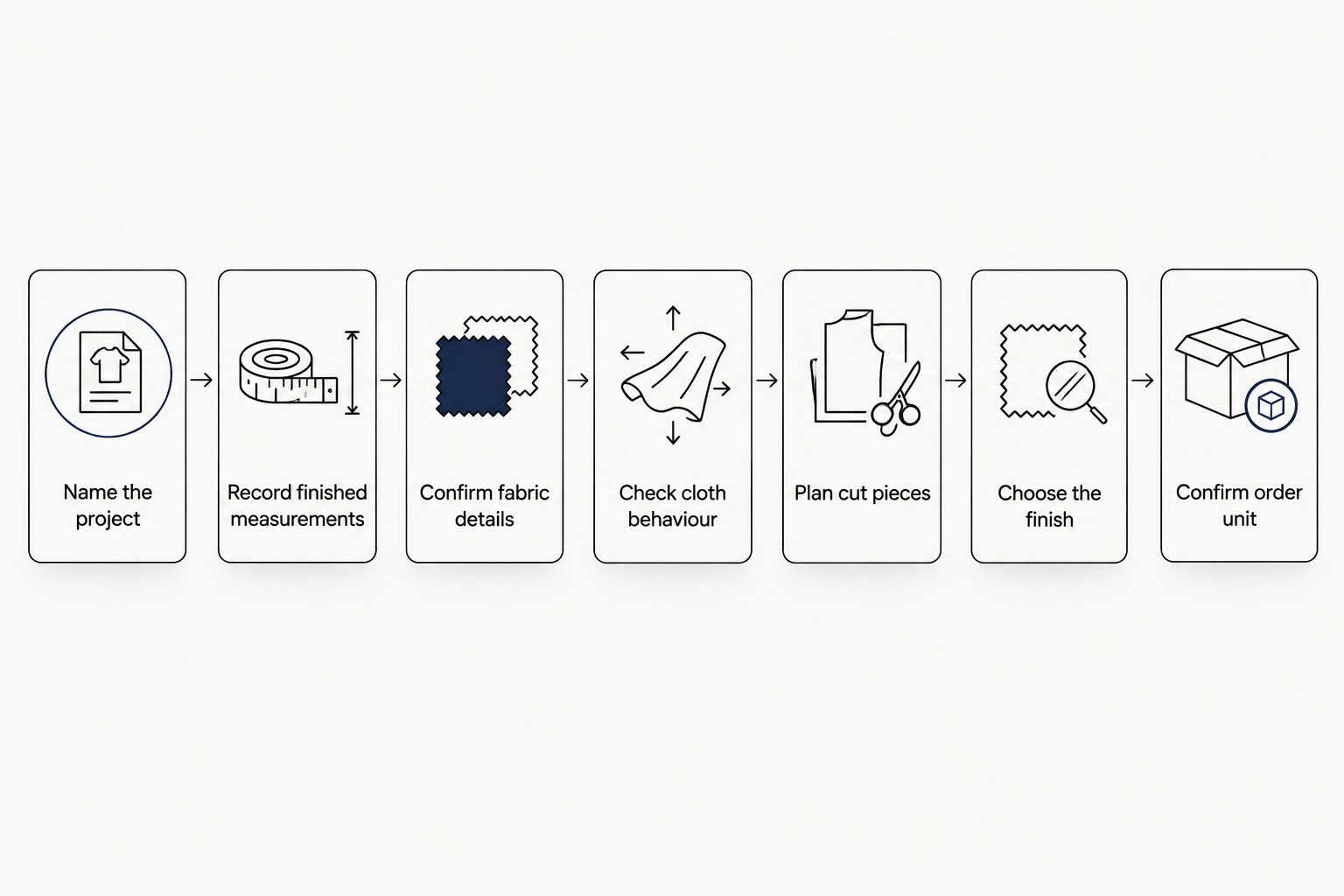
- Name the project. Write down whether you are making a curtain, cushion cover, table runner or removable decorative cover. Include its intended use: a decorative chair back and a chair seat face different demands.
- Record the finished measurements. Measure the actual window arrangement, cushion insert or table. Do not rely on a familiar size name or the measurements of an unrelated item.
- Confirm the fabric details. Check composition, width, pattern direction and care instructions. Treat anything unstated as a question to resolve before buying.
- Check how the cloth behaves. Examine a sample where possible. Fold it, hold it against light and sew a trial seam using your intended layers.
- Plan every cut piece. Include front and back pieces, hems, headings, closures and decorative borders. Mark which way each piece must face.
- Choose the finish. Decide how you will secure raw edges and whether the project needs lining, interfacing or another supporting layer. Test these combinations rather than assuming they suit the fabric.
- Confirm the order unit. Fabric width and the length you receive are different measurements. Check how the listing describes the quantity before placing your order.
Keep this project sheet with your fabric. It becomes a useful reference when you return to sewing after a busy week at home.
Why this matters
A fabric purchase is also a sewing decision. Width affects your cutting layout, pattern direction affects the joins, and care instructions affect how you prepare and maintain the finished item.
Pulpel is best for family shoppers looking for home textiles and furnishing fabrics for everyday use. For your 2026 sewing plans, use the individual listing to judge suitability: a retailer’s range does not make every fabric suitable for every project.
Your aim is simple. Choose cloth you can cut, sew, use and care for with confidence, rather than choosing a print first and solving the practical difficulties later.
Match casement fabric to the job
Use this comparison before settling on a fabric. The best choice depends on the finished item, not on which option sounds most substantial.
| Project | Best for | What to check | Benefit | Limitation |
|---|---|---|---|---|
| Curtains | Controlling the look of a doorway or window | Drape, light transmission, heading and hanging length | You can tailor the panel to your space | Privacy cannot be judged from a folded fabric photograph |
| Cushion covers | Removable decorative covers | Handle, seam behaviour, closure and care | A small project lets you practise construction | A furnishing label does not establish suitability for heavy wear |
| Table runners | Adding a decorative layer to a table | Flatness, print direction and cleaning instructions | A simple outline makes cutting easier to plan | Decorative cloth is not automatically heat protection |
| Chair-back covers | Removable protection or decoration over a chair back | Chair shape, fastening and finished fit | You can fit the cover to your own furniture | Chair-back suitability does not establish seat-upholstery suitability |
For a first attempt, choose a project with a straightforward shape and a finish you already understand. A complicated closure or carefully matched print adds another task, even when the cloth itself is easy to handle.
Check fibre content and weave separately
Casement is a fabric description used in furnishing contexts; it does not replace a composition statement. Do not assume every casement fabric is pure cotton, or that fabrics carrying the same name share the same finish.
Look for a clear fibre description. Cotton and a cotton blend are not interchangeable descriptions, and the word blend alone does not tell you the proportions. Where the listing leaves composition unclear, ask before choosing a preparation or washing method.
Next, examine the construction. Hold a sample against light to see the spaces between yarns, then look at its surface and edges. These observations help you judge the particular cloth; they are not proof of a performance rating.
A trial seam answers another question: does the fabric hold your chosen seam neatly? Sew through the same layers your project will contain, including any lining or trim. Check for puckering, pulled yarns and bulky folds before committing to the full item.
For everyday family use, favour a fabric with clear care information. A pleasing texture is useful, but it cannot compensate for a cleaning routine that does not suit your household.
Measure usable width before calculating quantity
Fabric width runs across the cloth; the length you order runs along it. Keep these measurements separate on your 2026 project sheet, and use one measurement unit throughout the cutting plan.
The supplied running-fabric listings include options described as 60 inches wide. That figure helps you begin a layout, but you still need to establish the usable width after allowing for selvedges and any unsuitable edge area.
Write your calculations in words before arranging the pieces:
- Cut width: finished width plus the allowances required by your chosen seams or hems.
- Cut length: finished length plus the heading, hem or closure allowances.
- Order length: the length required by the complete cutting layout, including pattern matching and preparation needs.
Do not add a standard shrinkage percentage without fabric-specific information. If washing is permitted, prepare and measure a sample to understand how that particular cloth responds.
Lay paper shapes across the proposed usable width before ordering. This reveals whether pieces fit side by side or need separate lengths. It also prevents the common mistake of counting only a cushion front and forgetting its back.
For curtains, decide on the heading before calculating length. The fabric required for a folded heading is part of construction, not part of the visible hanging measurement.
Check drape and privacy for curtains
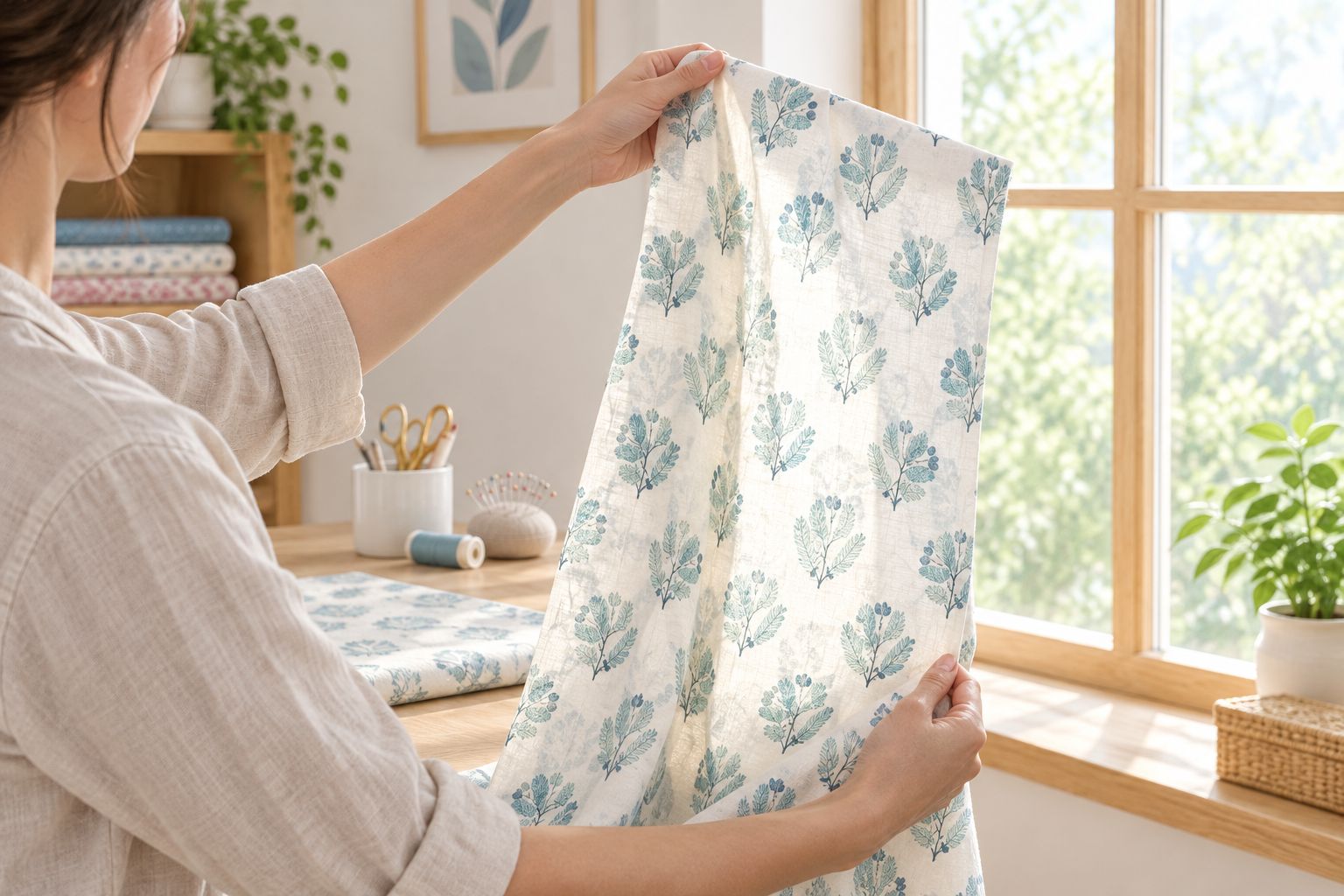
Hang a sample vertically rather than judging it flat on a table. Watch whether it falls in relaxed folds or holds a firmer shape, and decide which appearance suits your room.
For privacy, hold the sample where the curtain will hang and inspect it under the lighting conditions that matter to you. Check from both sides. A pale fabric photograph does not establish how much can be seen through the finished panel.
If you intend to add lining, test the outer fabric and lining together. The combined layers affect the hanging result and need compatible care instructions.
Measure from the intended hanging point, not automatically from the top of the doorway. Include the hardware and heading arrangement in your plan, then choose where the finished lower edge should sit.
Do not describe a fabric as blackout, sun-resistant or insulating unless the product information supports that claim. These are separate requirements, not qualities established by the name casement.
Plan prints, seams and decorative edges
A directional print must face the same way on adjoining pieces. Turning a cut piece sideways to save cloth can leave trees, flowers or other motifs pointing in different directions.
For a table runner, decide whether the design should face someone seated at the end or along the side. For a cushion, place the main motif on the front before planning the back pieces. The choice is yours, but make it before cutting.
Pattern matching also changes the layout. Ask for the repeat measurement when it matters to the project; do not estimate it from a cropped product photograph. Keep matched pieces labelled until you sew them.
Trim needs its own allowance. For example, this white and beige floral lace trim is described as 6 cm wide. Decide how much will remain visible and how much will sit inside the seam, then check care compatibility with the main cloth.
A decorative edge can make a simple project feel finished. It also adds a sewing and cleaning consideration, so keep the first version uncomplicated if you are still learning.
Why casement fabric suitability varies
These factors explain why the same broad fabric description can lead to different buying decisions:
- Fibre content: choose preparation and care from the stated composition and instructions.
- Weave and finish: inspect how the particular cloth folds, feels and behaves at a seam.
- Usable width: match the cutting layout to the width available for your pieces.
- Pattern direction: account for motifs that cannot be rotated without changing their appearance.
- Construction: include the heading, closure, lining and edge finish your item needs.
- Household use: separate occasional decoration from items needing frequent cleaning or demanding wear.
No single factor settles the decision. A suitable print with an unsuitable care routine is still the wrong choice for that project.
Which listed running fabrics suit decorative sewing?
Pulpel’s supplied 2026 product listings include the following furnishing materials. Neither listing identifies the fabric as casement, so treat these as decorative running-fabric options, not as confirmed casement substitutes.
| Listed fabric | Stated width | Best for | Useful detail | Limitation |
|---|---|---|---|---|
| Christmas Printed Cotton Running Material | 60 inches | Christmas table cloth, table runner and cushion-cover projects | The title specifies cotton and intended projects | Confirm care, order unit and usable width before cutting |
| Festive Bow Printed Running Fabric | 60 inches | Festive table cloth, table runner and cushion-cover projects | The title identifies the design and intended projects | The title does not specify fibre composition |
A seasonal print suits a seasonal project. For an item intended to stay in use throughout the year, first decide whether the design fits your everyday room setting.


Should you wash casement fabric before sewing?
Prepare casement fabric according to its own care instructions before cutting. If washing is permitted, test a sample first and measure it before and after preparation; do not assume a universal shrinkage allowance.
Keep your 2026 care notes with the project sheet. Include any trim or lining instructions so the completed item has a workable cleaning routine.
Can you use casement fabric for clothing?
Do not choose casement fabric for clothing on the name alone. Check skin feel, drape, opacity and care against the garment’s needs; a fabric intended for furnishings is not automatically suitable for a nightie or churidar.
Is casement fabric suitable for chair seats?
A casement description does not establish upholstery suitability. For a chair seat, look for explicit intended-use information and relevant wear-performance details rather than assuming a curtain or cushion-cover fabric can handle the same job.
FAQ
What should I check first when buying casement fabric online?
Check the stated fibre content, width, intended use and care instructions first. Then compare those details with your project's cutting and cleaning requirements.
Is casement fabric always cotton?
Do not assume casement fabric is always cotton. Use the individual listing's composition statement, and ask for clarification when it is missing.
How much casement fabric do I need for a curtain?
Calculate curtain fabric from the finished measurements, heading, hems, fullness and usable fabric width. Pattern matching and preparation needs also belong in the cutting plan.
Does 60 inches wide tell me how much fabric I receive?
60 inches wide describes the width across the fabric, not the length supplied. Check the listing's order unit separately before buying.
Can I use casement fabric for cushion covers?
Choose casement fabric for cushion covers only after checking its handle, seam behaviour, closure requirements and care. Do not treat a decorative cushion-cover project as proof of heavy-wear suitability.
Will casement fabric give complete privacy at night?
The name casement does not establish complete privacy at night. Inspect a sample under the relevant indoor and outdoor lighting, and test any planned lining with it.
Can I wash all my home-sewing fabrics together?
Wash home-sewing fabrics together only when their care instructions are compatible. Check the main fabric, lining and trims separately before deciding how to clean the finished item.
One last thing
Your cutting layout can change the purchase more than your colour choice. A cloth that seems wide enough can still require a different layout once you keep every motif upright and include the back pieces, hems and closures.
Before ordering from Pulpel for a 2026 home-sewing project, draw every piece on paper and write the care requirement beside it. That small preparation gives you a clearer shopping decision—and a calmer start at the sewing machine.