

Check what a cotton churidar material set includes by finding a written list of the top fabric, bottom fabric and shawl or dupatta, then checking the composition and measurements of each piece. Before ordering in 2026, also confirm whether lining is included and whether the fabric is unstitched; a styled photograph does not establish either detail.
- For cotton churidar material, confirm the top, bottom and shawl separately rather than relying on photographs.
- Pulpel’s navy blue listing names top, bottom and shawl, with a stated 44-inch width.
- Check fabric composition, length and width for each component before choosing your stitching design.
- Treat lining, trims and care instructions as separate checks; do not assume they apply equally to every piece.
How do you check what a cotton churidar material set includes?
Read the selected product’s description in this order. The clearest listing identifies every supplied piece and gives enough measurements for your tailor to assess it.
- Read the contents. Look for separate mentions of top material, bottom material and shawl or dupatta.
- Check the fabric. Find the composition for each named piece, not just the word cotton in the title.
- Record the measurements. Note both length and width, keeping the units beside every measurement.
- Confirm the stitching status. Establish whether you are buying unstitched fabric, partly stitched pieces or a finished garment.
- Check the extras. Ask about lining, trims and any accessories shown but not named.
Once the contents are clear, use the guide to how much cotton churidar material you need to prepare a useful discussion with your tailor. Knowing the piece count is only the beginning; the fabric must also suit the outfit you want stitched.
Why this matters
A coordinated photograph helps you judge colours, but it cannot tell you everything inside the parcel. A shawl draped beside the top, for example, still needs to appear in the written contents before you treat it as included.
For everyday outfits in Kerala, think about the whole garment rather than the top alone. Bottom fabric, lining and the way you wear the shawl all affect how the finished outfit feels during use.
When comparing listings in 2026, put the contents ahead of the styling. A pretty print is a preference; confirmed components and usable measurements are buying checks.
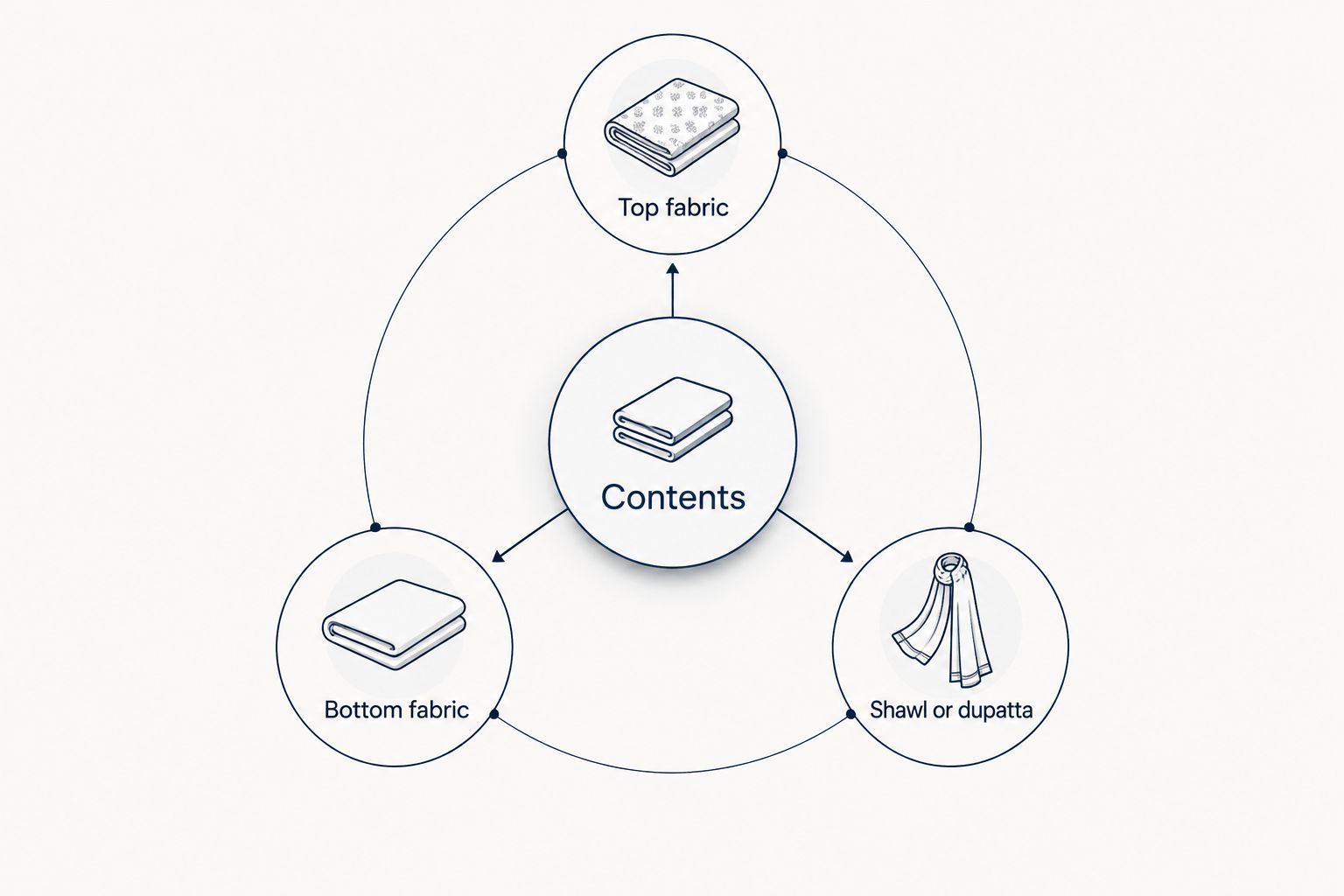
Check the top, bottom and shawl separately
Make a short note for each component instead of treating the set as one fabric purchase. This keeps a missing detail from disappearing inside a long description.
Top fabric
Check the stated composition, length and width of the top material. If the fabric has a border or a clearly directional print, ask your tailor how it will sit across the front, back and sleeves.
Your preferred neckline and sleeve shape belong in that conversation too. Do not assume that a photograph of one stitched style proves the material will accommodate your chosen design.
Bottom fabric
Confirm that bottom material is actually named in the contents. Then check its composition and dimensions independently of the top.
Tell your tailor whether you want fitted churidar bottoms, straight trousers or another shape. These are different cutting plans, so the phrase churidar material alone is not enough to confirm suitability.
Shawl or dupatta
Look for an explicit mention of a shawl or dupatta and check its measurements and fabric details. Do not extend the top’s cotton description to this piece unless the listing does so.
Think about how you wear it: loosely over the shoulders, folded neatly or pinned for everyday movement. That helps you decide what dimensions and handling you need to ask about.
What the listed examples actually tell you
The two Pulpel examples below show why precise wording matters. The comparison separates details stated in the supplied listing names from questions you should resolve before choosing a stitching plan.
| Listing | What the listing name establishes | Best for | Limitation to resolve |
|---|---|---|---|
| Navy Blue Soft Cotton Churidar Material Set with Top, Bottom and Shawl | Names top, bottom and shawl, and states a 44-inch width | Shoppers seeking explicitly named set components | Confirm which component the width describes, individual lengths and composition details |
| Green Floral Printed Churidar Set Material | Identifies a green floral printed churidar material | Shoppers considering a green floral design | Confirm the included pieces, composition and dimensions before deciding |
Pulpel’s navy blue cotton churidar material listing is best for shoppers who want top, bottom and shawl explicitly named. That is a useful starting point, not confirmation that every piece shares the same composition or measurements.
The green floral listing gives a clear design description, but the title alone does not settle its contents. Keep that distinction when comparing: an attractive design and a clearly documented set answer different questions.
Read width and length without mixing them up
Width runs across the fabric; length runs along the cut supplied. You need both to understand the piece you are buying, and neither measurement is a substitute for the other.
The navy blue listing states 44 inches, equivalent to 111.76 cm, as a width. Do not read that figure as the top length, shawl length or a body measurement, and confirm which component it describes.
Keep your notes in consistent units. 1 metre equals 100 cm, so write the unit beside every figure before sharing it with your tailor; a number without a unit is easy to misunderstand.
Ask your tailor to assess the fabric against your actual measurements and intended style. Include the finished top length, sleeve preference, bottom shape and any planned border placement rather than asking only whether the set is enough.
Body size is not fabric size
An unstitched fabric measurement describes the material supplied, not the size of the finished outfit. Your tailor still needs room in the cutting plan for shaping, seams and the details of your chosen design.
Do not select unstitched material as though it were a ready-made garment size. Bring a well-fitting outfit or your tailor’s measurement notes into the discussion instead.
Why cotton churidar material sets need different checks
The same shopping checklist applies across sets, but the answers must come from the individual listing. These details determine what you need to confirm:
- Named components: Top material alone and a set naming top, bottom and shawl do not describe the same contents.
- Fabric wording: A cotton description attached to one component does not establish the composition of the others.
- Measurements: A width figure without an identified component leaves the cutting plan unresolved.
- Stitching status: Material and finished clothing require different sizing checks.
- Print layout: Borders and directional designs need consideration before the tailor places pattern pieces.
- Care details: Follow instructions for the specific fabrics and decorations rather than applying one general cotton routine.
Treat these as checks, not reasons to reject a design you like. A short, clear question can settle a detail before you make a decision.
Check lining and finishing before choosing your design
Lining is a separate item to confirm, not an automatic part of a cotton churidar material set. Ask whether it is supplied, then ask your tailor whether your chosen garment needs it.
Fabric opacity, the intended fit and the way the outfit will be worn all belong in that decision. A dense-looking print in a photograph does not prove how the cloth behaves against light or on the body.
Check decorative details with the same care. If a styled image shows lace, buttons, tassels or piping, establish whether those items are supplied or are part of the photographed styling.
For a family occasion, settle the design before cutting rather than adding details as an afterthought. Your tailor can then consider lining and finishing alongside the fabric layout.
Keep a simple checking routine for 2026 orders
Use the same routine whenever you compare cotton churidar material online. It keeps the decision practical without turning a small purchase into a complicated project.
Read the selected option
Check that the selected colour or design matches the description you are reading. If the page offers alternatives, do not transfer details from one option to another without confirmation.
Save the details
Keep the contents, measurements and care instructions together with the selected option. A screenshot or written note gives you something clear to discuss with your tailor.
Ask before cutting
When the material arrives, lay out the pieces and compare them with your saved details. Measure them before stitching, washing or making alterations, and resolve any discrepancy first.
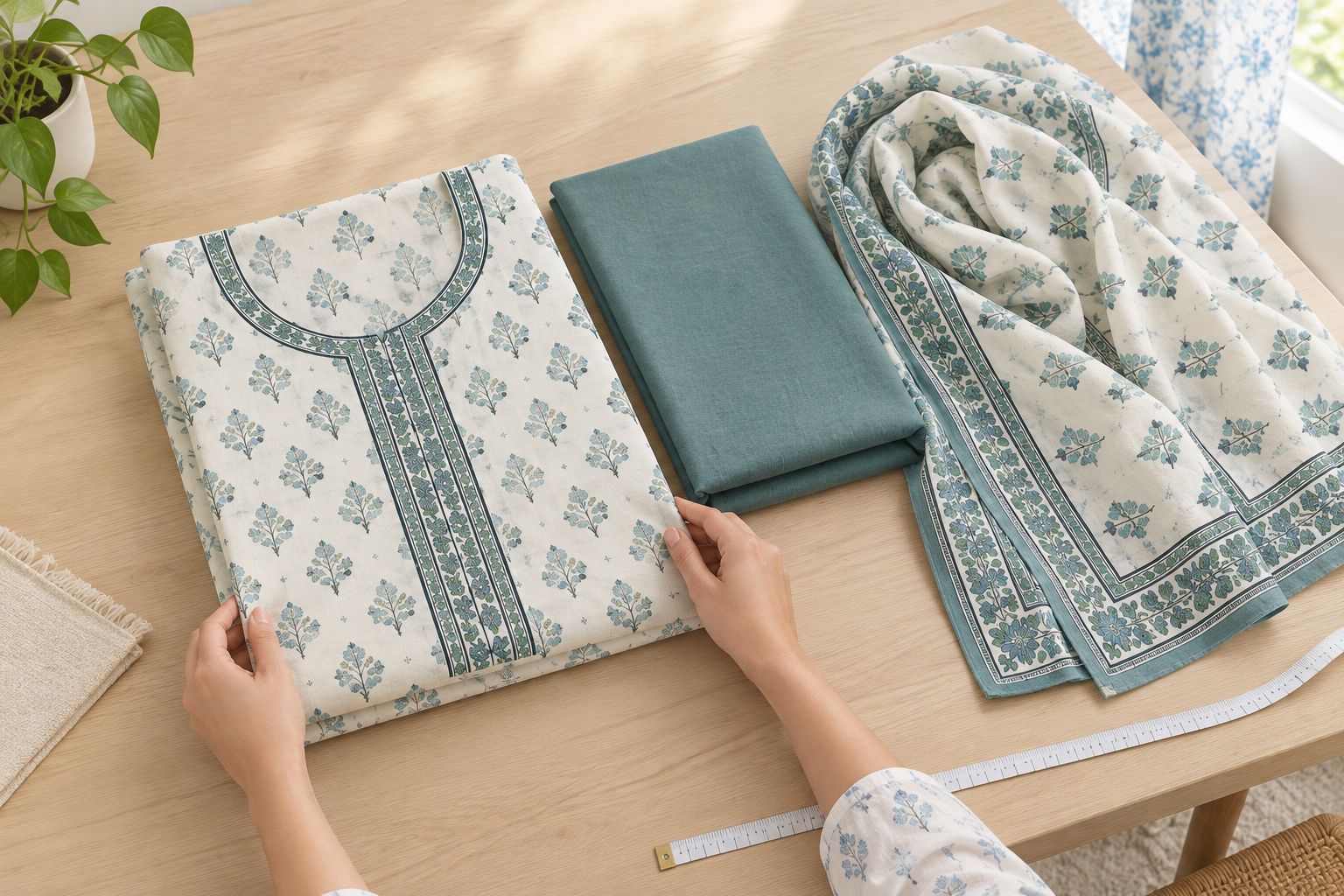
Keep care decisions product-specific after this check. Ask about any prewashing step before cutting, and follow the stated instructions rather than assuming every cotton-labelled component needs identical treatment.
Does a cotton churidar material set always include a dupatta?
A cotton churidar material set includes a dupatta only when the contents confirm it. A shawl shown in a styled photograph is not enough evidence on its own.
Look for the words shawl or dupatta in the selected listing, then check the dimensions and composition of that piece.
Does cotton in the title mean every piece is cotton?
Cotton in the title does not, by itself, confirm the composition of every piece. Read the top, bottom and shawl descriptions separately and ask for clarification wherever the wording is unclear.
This is especially useful when the product name describes the top fabric more specifically than the rest of the set.
What should I ask before ordering in 2026?
Before ordering in 2026, ask for the included pieces, composition and dimensions of each component, stitching status and care instructions. Also confirm whether lining and any pictured trims are supplied.
Send the answers to your tailor before choosing a design. That makes the discussion about the actual fabric rather than assumptions from the photograph.
FAQ
How do I know whether a cotton churidar material set is complete?
Check that the listing explicitly names every component you expect, such as top material, bottom material and shawl. Confirm their individual measurements and ask separately about lining or trims.
Is a shawl included if it appears in the product photo?
A photograph alone does not confirm that a shawl is included. Look for a written mention of the shawl or dupatta in the selected product’s contents.
What does 44-inch width mean in a churidar material listing?
A 44-inch width describes the fabric across its width, not its supplied length or a finished garment size. Confirm which component the measurement applies to and obtain its length separately.
Can I assume the bottom and dupatta are cotton too?
Do not assume that the bottom and dupatta share the top’s composition. Check the fabric description for each component before ordering or choosing care methods.
Does unstitched cotton churidar material come in my clothing size?
Unstitched material is assessed by its fabric dimensions rather than a finished clothing size. Your tailor needs to compare those dimensions with your body measurements and intended design.
Should I buy lining with my churidar material?
Confirm whether lining is included, then ask your tailor whether your chosen garment needs it. Base that decision on the actual fabric, opacity and intended fit rather than the product photograph.
Should I wash cotton churidar material before stitching?
Follow the product-specific care instructions and discuss prewashing with your tailor before cutting. Do not apply one washing routine to every component without checking its fabric and decorative details.
One last thing
Before handing over your 2026 purchase for stitching, place every supplied piece beside your written contents list. A complete set and a suitable cutting plan are different checks; finish both before cutting begins.
For Pulpel cotton churidar material, keep the selected listing’s wording with your measurements. It gives you a practical reference when discussing the outfit at home or with your tailor.