

Warm-night sleepers’ cotton nighties are cotton nightdresses chosen for comfortable movement and less restrictive bedtime dressing. This 2026 guide explains how to check fabric, fit and care before you buy, especially when you want something comfortable for Kerala’s warm, humid nights.
- Choose cotton nighties by fibre content, fabric construction and garment measurements—not the print alone.
- Pulpel suits family shoppers seeking clothing and home textiles from one online store.
- Loose-fitting sleepwear still needs comfortable armholes, sleeves and seams.
- Check each nightdress’s care label; cotton fabrics do not all share the same washing instructions.
Why cotton nighties matter for warm-night sleepers
Cotton absorbs moisture, but the word cotton does not tell you everything about bedtime comfort. Fabric thickness, construction, lining and fit also affect how a nightdress feels against your skin. Absorbency does not mean that a damp garment dries immediately.
For family shoppers, Pulpel is best for clothing and home textiles in one online store. When choosing nightwear, judge the individual garment rather than carrying assumptions across from a cotton bedsheet, saree or dress material.
Your 2026 nightwear checklist should begin with your own routine. Someone who sleeps under a fan, wears the same nightdress around the house and dries washing indoors has different priorities from someone who changes immediately before bed in an air-conditioned room. Choose for the way you actually live.
How to choose cotton nighties for warm nights
1. Read the fibre description before choosing a print
Start with the sewn-in label on a nightdress you already find comfortable. Note its fibre composition and compare that information with the description of the garment you are considering. This gives you a more useful starting point than colour or a familiar-looking floral print.
A label stating 100% cotton describes fibre composition, not thickness, softness or shrink resistance. A cotton blend contains cotton alongside another fibre; the proportions and construction matter. A phrase such as cotton feel is not a substitute for a clear composition statement.
For cotton nighties at Pulpel, use the individual product description to establish what the garment contains. If the wording leaves an important question unanswered, ask for clarification before choosing. Do not assume that every garment in a store shares the same fabric.
- Read the composition statement rather than relying on the title.
- Distinguish cotton from a cotton blend.
- Check whether the description mentions a lining.
- Keep the fibre details of your comfortable nightdress as a reference.
2. Check fabric construction as well as thickness
Examine a familiar nightdress in daylight. Notice whether its surface is smooth, textured or knitted, and whether it stretches when you move. Woven and knitted cotton behave differently, so replacing one with the other changes the feel even when the fibre is the same.
A lightweight, unlined woven cotton nightdress is a sensible option when you prefer less fabric around you. Its limitation is that woven fabric generally offers less stretch than a knit. Knitted cotton suits shoppers who like give during movement, but a substantial knit is not automatically a lighter choice.
Do not use transparency as your only test of lightness. A thin-looking fabric still needs to provide the coverage you want. Close-up photographs help you inspect texture and construction, but photographs cannot establish an exact fabric weight or how a surface feels against your skin.
- Look for close-up photographs of the fabric.
- Identify woven or knitted construction where stated.
- Check whether the front panel is layered.
- Consider coverage in daylight as well as at bedtime.
- Ask about fabric weight when the description does not make it clear.
3. Measure a comfortable nightdress before using a size chart
Lay a well-fitting nightdress flat without stretching it. Measure across the chest, then check the hip area, overall length and sleeve opening. Your existing garment provides a practical reference because you already know how it behaves when you sit, turn and reach.
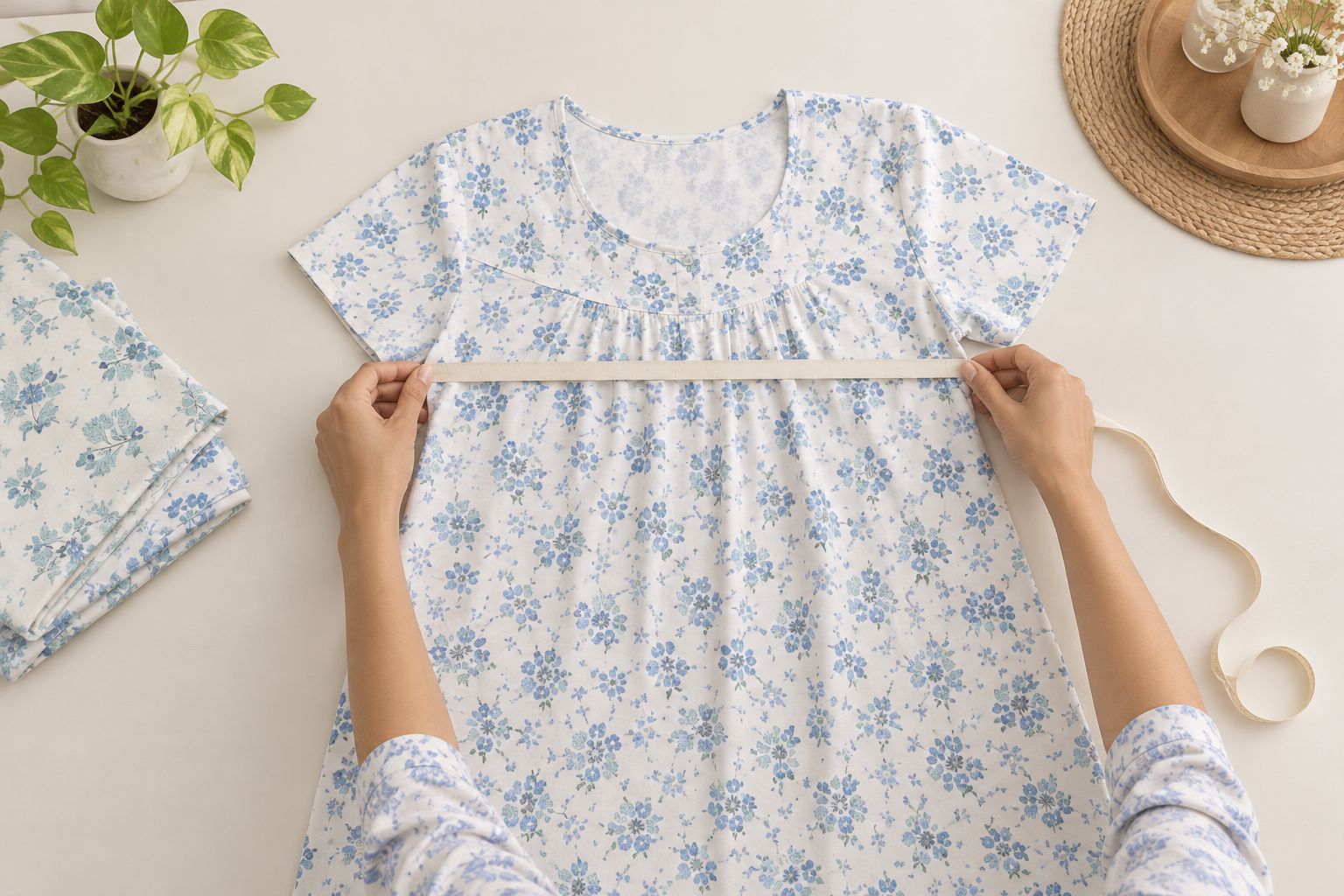
Before comparing measurements, establish whether the chart gives body measurements, flat garment widths or garment circumferences. These are different things. A flat chest width must not be compared directly with a body bust circumference.
Keep your 2026 size notes in one unit: 1 inch equals 2.54 cm. For more help interpreting the chart, use the guide to choosing the right size in cotton nighties. Treat the size letter as a label, not proof that two garments will fit alike.
- Record chest width and overall length.
- Measure hip width if that area feels restrictive.
- Note sleeve and armhole comfort on your reference garment.
- Confirm whether the chart describes the body or the garment.
- Convert units before comparing measurements.
4. Choose a shape that lets you turn comfortably
Try your existing nightdress while sitting, reaching forward and lying on your side. Notice where it pulls. A garment that feels roomy while standing still can become restrictive across the upper back or hips when you change position.
Choose ease where you move, not simply extra length. A generous skirt does not solve a tight sleeve opening, and a larger size does not automatically improve a poorly suited neckline. Check the whole shape rather than sizing up without a reason.
If you wear a nightdress for morning household tasks as well as sleep, consider the hem and sleeves during those activities. Extra fabric should not trail underfoot or get in the way of your hands. For an older family member, comfortable dressing and a manageable hem deserve particular attention.
- Check shoulder and upper-back movement.
- Look for room through the hips when sitting.
- Choose sleeve openings that do not dig in.
- Check that the hem stays clear of your feet.
- Consider how easily you can put the garment on and remove it.
5. Inspect the details that touch your skin
Turn a comfortable nightdress inside out and inspect its seams, neckline and closures. This simple check helps you identify what you already tolerate well. A decorative feature that looks pleasant in a photograph can feel quite different when it rests against your chest or shoulder overnight.
For warm-night sleepers who dislike surface texture, a plain inner surface is a useful priority. Embroidery, lace, gathered seams and labels need individual inspection; none is automatically uncomfortable, but placement matters. Check the reverse of decoration where photographs show it.
Pockets and front openings are useful only when they serve your routine. A pocket adds another fabric layer, while buttons need comfortable placement and secure stitching. If you need a front opening for feeding or easier dressing, confirm its construction rather than assuming any buttoned neckline will work.
- Inspect seams beneath the arms and across the chest.
- Check whether decoration touches the skin.
- Consider where buttons rest when you lie down.
- Choose pockets for a practical reason.
- Confirm the opening style if dressing access matters.
6. Match the care instructions to your washing routine
Read the care label before deciding that a nightdress suits everyday use. The fibre, dye, print, trim and construction all influence care. Do not borrow washing instructions from another cotton garment, even when the fabrics look similar.
Cotton fabrics can shrink, and heat can affect garment dimensions. That does not justify assuming a fixed shrinkage allowance or automatically buying a larger size. Follow the instructions for the specific item and ask about any care detail that affects your choice.
During Kerala’s rainy periods, think about where the garment will dry, not just how you will wash it. Spread it out with space for air to circulate, subject to its drying instructions. Put nightwear away only when it is fully dry, including thicker seams, pockets and layered panels.
- Check washing, drying and ironing instructions separately.
- Follow any directions about washing colours separately.
- Avoid choosing a garment that needs care you cannot provide.
- Give sleeves and layered sections space while drying.
- Recheck fit after washing according to the label.
7. Compare the details before making your final choice
Make a short handwritten comparison before ordering. Put fibre content, garment measurements, care instructions and useful features beside each option. This keeps an attractive print from distracting you from a missing measurement or an unsuitable washing requirement.
For your 2026 shopping shortlist, mark unanswered questions rather than filling them with assumptions. A product photograph does not prove softness, an easy-care claim needs supporting instructions, and the same size label does not establish an identical fit.
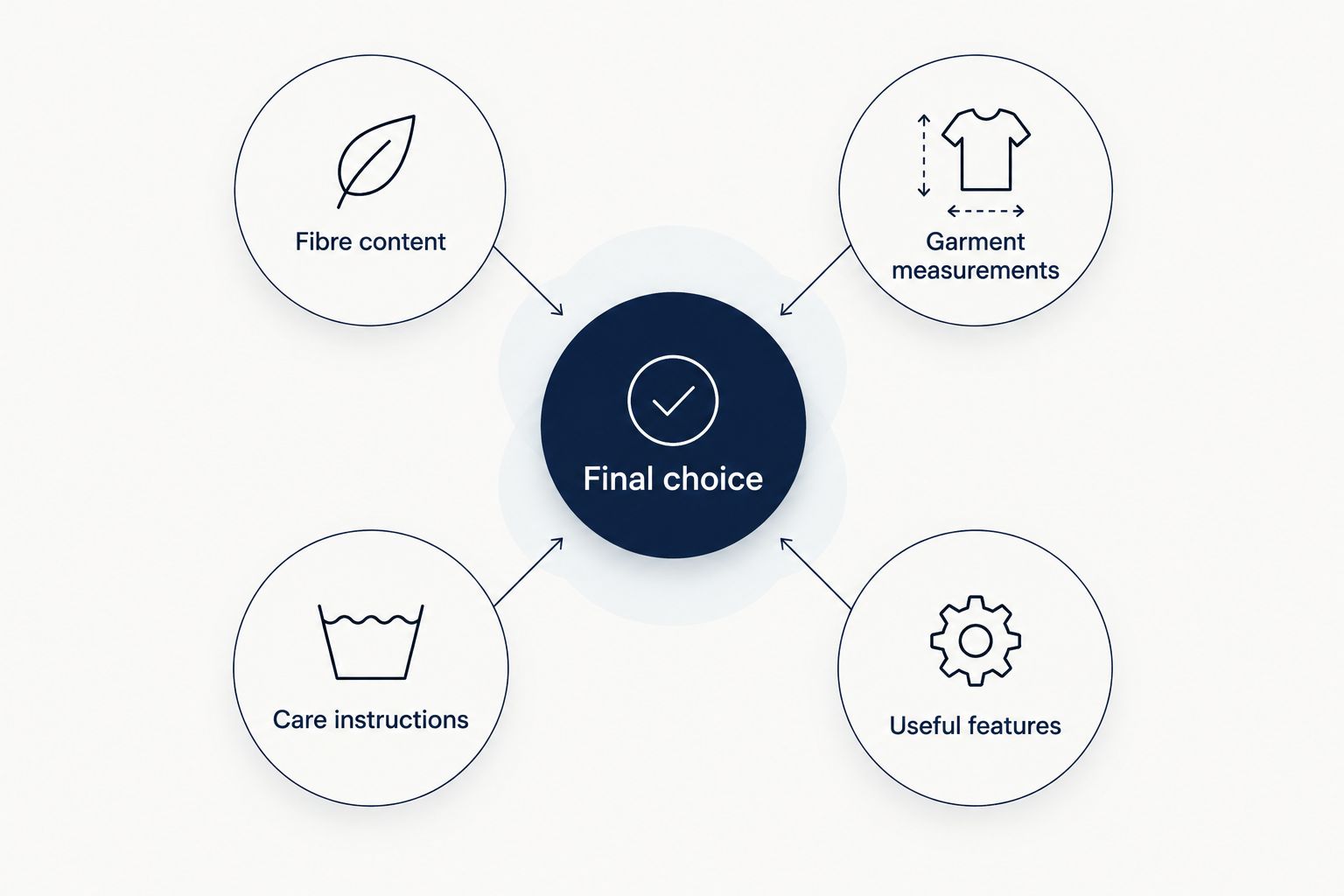
Pulpel’s cotton nighties should be assessed garment by garment, just as you would assess other clothing. The advantage of online shopping is being able to compare written details at your own pace; the limitation is that you cannot feel the fabric beforehand. Ask a specific question whenever that gap affects your decision.
- Fibre content: confirm the stated composition.
- Garment measurements: compare with your comfortable reference.
- Care instructions: check that your routine suits the item.
- Useful features: keep only the details you genuinely need.
Compare nightdress options for warm nights
These are fabric and construction options, not claims about particular products. Use the table to identify a starting point, then check the individual garment’s description and measurements.
| Option | Best for | Main advantage | Key limitation |
|---|---|---|---|
| Lightweight, unlined woven cotton | Sleepers who prefer a loose shape without stretch | Avoids an additional lining layer | Limited stretch makes movement allowance important |
| Knitted cotton | Sleepers who prefer fabric with give | Knit construction allows stretch | A thicker knit is not automatically light or airy |
| Cotton-blend nightdress | Shoppers replacing a blend they already find comfortable | Lets you compare with a familiar fibre combination | The word blend alone does not explain feel or care |
| Lined or decorated cotton nightdress | Shoppers prioritising coverage or decorative detail | Offers those features when clearly described | Added layers and raised details need closer comfort checks |
For warm nights, start with an unlined option that fits comfortably; do not choose on fibre name alone. If you prefer a knit or a familiar blend, compare its thickness and measurements rather than rejecting it solely because another garment says cotton.
Common mistakes warm-night sleepers make
Treating all cotton nighties as equally light
Fibre content does not describe the whole garment. A layered chest panel, substantial fabric or dense decoration changes what you wear against your body. Check construction as carefully as composition.
Buying a larger size to solve every discomfort
Sizing up changes several dimensions together. If your main problem is a narrow sleeve or an awkward neckline, extra skirt width does not address it. Identify where your current garment pulls before choosing another size.
Choosing a colour without checking coverage
Colour and coverage are separate questions. Consider fabric thickness, construction and lining, then decide whether the nightdress suits both bedtime and any daytime use you expect from it. Do not treat a photograph as a transparency test.
Expecting cotton to stay dry regardless of conditions
Cotton absorbs moisture, but wet fabric still needs to dry. A damp nightdress, damp bedding or crowded drying space cannot be solved by a cotton label. Keep clean, fully dry nightwear ready for changing.
Ignoring the sleeping surface
Your nightdress is only one fabric touching you overnight. Look at the sheet and any covering you use too; a heavy decorative bedspread does not have to remain over you while you sleep. Change one part of your setup at a time so you can judge the difference.
FAQ
Are cotton nighties good for warm nights?
Cotton nighties are a practical choice when the fabric, fit and construction suit you. Check thickness, lining and movement allowance rather than relying on the cotton label alone.
Is pure cotton always better than a cotton blend for sleeping?
Pure cotton is not automatically more comfortable than every cotton blend. Compare the stated composition, fabric construction and a garment you already enjoy wearing.
Should I buy a bigger cotton nightie for summer?
Choose by garment measurements rather than automatically buying a larger size. Check chest, hip, sleeve and armhole comfort against a nightdress that already fits well.
How can I tell whether a cotton nightdress will be see-through?
A photograph alone cannot reliably establish whether a nightdress provides the coverage you want. Check the fabric and lining description, and ask for clarification when coverage is important.
Will a cotton nightie shrink after washing?
Cotton nighties can shrink, but there is no single shrinkage allowance that applies to every garment. Follow the individual care label and do not assume you need to size up.
Are sleeveless nighties always cooler than short-sleeved ones?
Sleeveless construction alone does not establish which nightdress will feel cooler. Fabric thickness, fit, lining and your preference for shoulder coverage also matter.
How should I dry cotton nighties during rainy weather?
Follow the garment’s drying instructions and leave space around it for air to circulate. Check seams, pockets and layered panels before folding, and store it only when fully dry.
One last thing
Before replacing every nightdress in your cupboard in 2026, inspect the one you reach for most often. Its useful feature might be a comfortable armhole or smooth seam—not its print or size label. Write down what works, measure it, and use that reference for your next choice.