

Choose cotton nighties by checking the fabric description, garment measurements, freedom of movement and the features you actually use, rather than the print alone. For everyday wear in 2026, a comfortable neckline, practical sleeves, usable pockets and care instructions that suit your washing routine matter more than extra decoration.
- Choose cotton nighties by fabric, measurements and movement before colour or print.
- Pulpel serves family shoppers looking for clothing and home textiles; assess each nightie's details separately.
- Pockets and front openings are useful only when their position and construction suit your routine.
- Follow each garment's care label rather than assuming all cotton nightwear washes alike.
How do you choose cotton nighties with useful everyday features?
Start with fit and fabric, then choose the smallest set of features that makes your day easier. A pocket is helpful if you can reach it comfortably; a front opening is helpful if it opens far enough for its intended use. Neither compensates for tight armholes or an awkward hem.
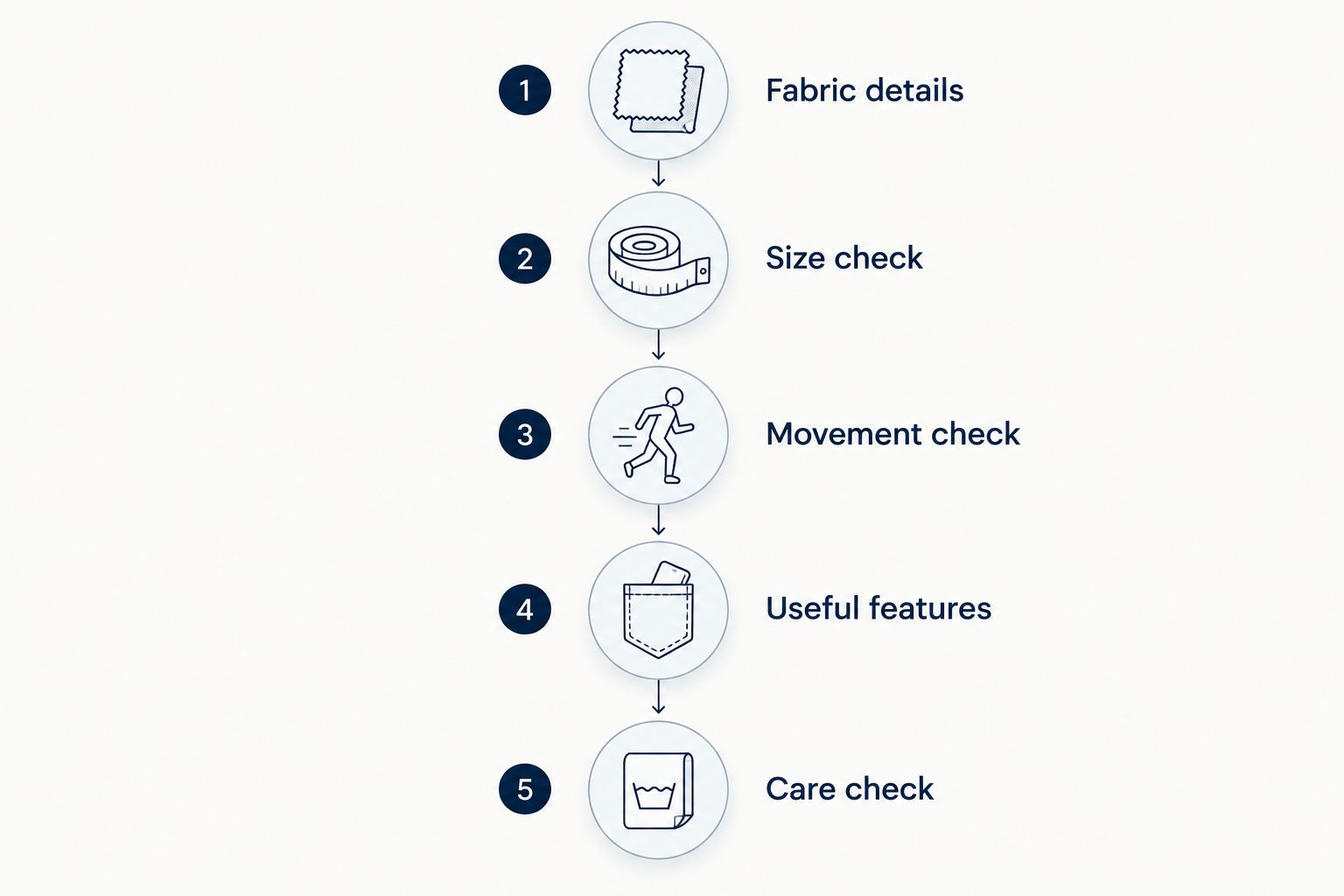
Use this order when comparing cotton nighties online:
- Fabric details: Read the stated fibre composition and any information about lining or fabric construction.
- Size check: Compare the listing's measurements with a nightie that already fits you comfortably.
- Movement check: Consider sitting, bending, reaching and turning in bed, not just standing.
- Useful features: Look closely at pockets, closures, sleeves and neckline coverage.
- Care check: Read the washing and drying instructions before deciding.
For measurement help, use the guide to choosing the right size in cotton nighties. Keep your measurements beside you while reading each product page; a familiar size letter is not a substitute for checking dimensions.
Why this matters
A nightie has to work while you rest, move around the house and manage ordinary family routines. The most decorative option is not automatically the most comfortable one, and a loose-looking photograph does not establish how the garment will fit you.
For your 2026 nightwear purchases, start with what bothers you about your current nightie. A pulling sleeve, a neckline that shifts or a pocket that drags gives you a more useful shopping brief than simply choosing another floral print.
Check the cotton description before judging comfort
Read the composition rather than treating every use of the word cotton as the same promise. If a listing says cotton blend, check which fibres are named; if it states pure cotton, still look separately at the garment's construction and care instructions.
Cotton content alone does not tell you fabric thickness, openness of weave or how a seam feels against your skin. Close-up photographs help you inspect the surface, but they cannot confirm softness by touch. Do not turn a photograph into a fabric guarantee.
Check these details before comparing colours:
- Composition: Is the fibre content clearly stated?
- Fabric appearance: Can you see close-up images rather than only a distant garment view?
- Lining: Is a lining mentioned, and is its material identified?
- Decoration: Are embroidery, trims or gathered panels positioned where you expect comfortable contact?
If you prefer an unlined nightie, confirm that detail rather than assuming it from a lightweight appearance. If coverage matters, ask about the fabric instead of relying on a dark print to provide it.
Measure a comfortable nightie, not just your usual size
A well-fitting nightie gives you a useful starting point for an online purchase. Lay it flat without stretching it, smooth out folds and note the dimensions that correspond to the seller's chart. Follow the chart's measuring method wherever it differs from your own.
Before comparing figures, establish whether the chart gives body measurements, full garment measurements or flat widths. These are different things. Also keep centimetres and inches separate; compare like with like throughout your notes.
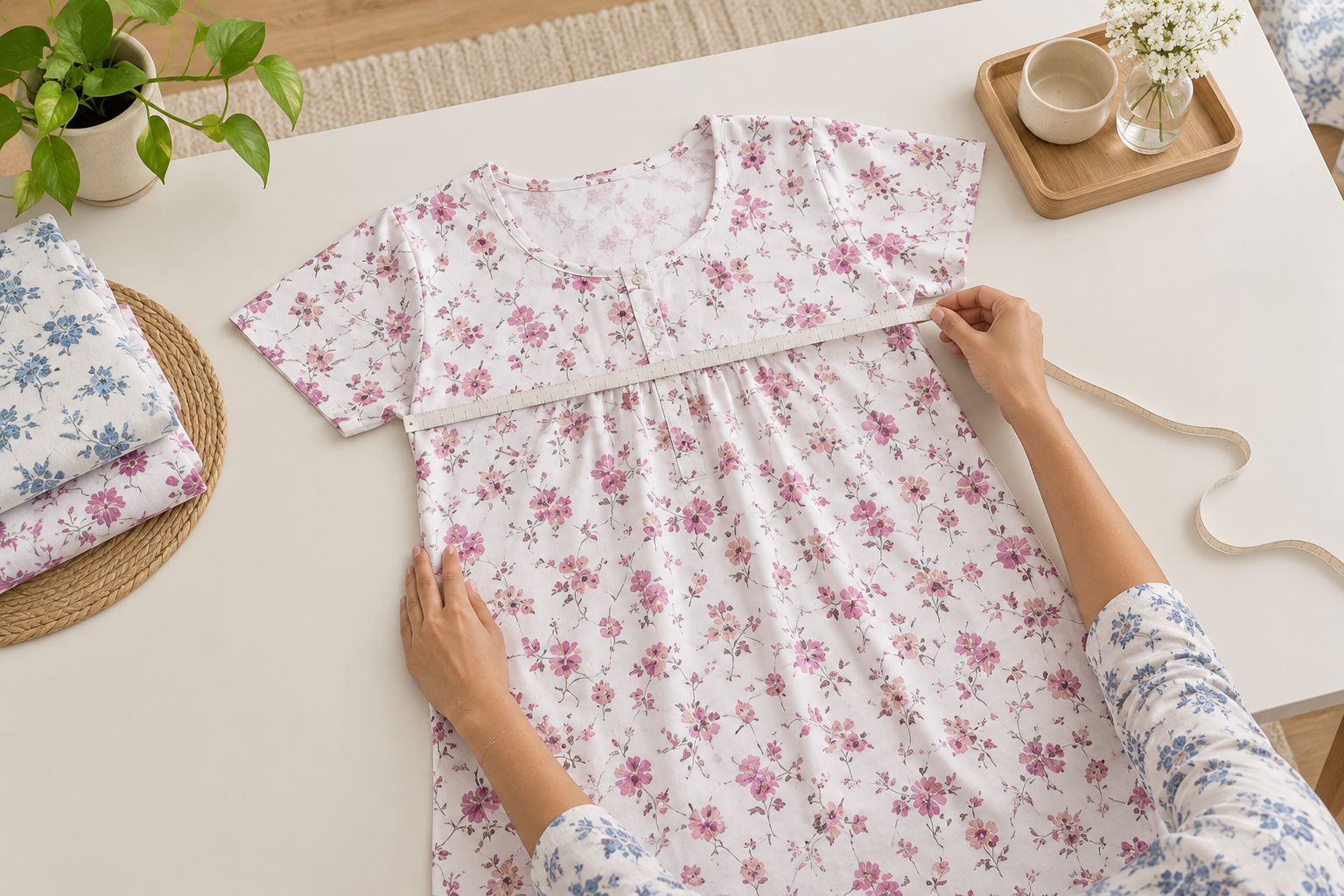
Look beyond chest width. Check the hip area, shoulder position, sleeve opening and overall length wherever those measurements are supplied. A generous body can still feel restrictive at the upper arm.
Choose room for movement, not simply the largest size. Excess length or a neckline that slips can create a different fit problem. For a 2026 online order, save your measurement notes so you can compare another garment without starting again.
Compare everyday features by the job they do
No single closure, sleeve or pocket arrangement is best for everyone. Use the table to separate a useful feature from one you are unlikely to use; these are general design choices, not specifications for any particular product.
| Feature or option | Best for | Practical advantage | Limitation to check |
|---|---|---|---|
| Pull-over neckline | Shoppers who prefer fewer fastenings | No front closure to operate | Opening must pass comfortably over your head |
| Button-front opening | Shoppers who want adjustable front access | Opens only as far as needed | Buttons and gaps need checking |
| Zip-front opening | Shoppers who prefer a sliding closure | Opens and closes along a defined section | Zip position and inner finish affect comfort |
| Side pocket | Shoppers carrying a small everyday item | Keeps the item within reach | A loaded pocket can pull on the garment |
| Short sleeves | Shoppers who prefer less arm coverage | Leaves more of the arm uncovered | Sleeve edges still need comfortable clearance |
| Longer sleeves | Shoppers who prefer more arm coverage | Covers more of the arm | Cuffs and sleeve length must suit household tasks |
Use the limitations column as your inspection list. A feature earns its place only when it solves a problem without introducing another one.
Pockets: choose position and usefulness over pocket count
A pocket is useful for something small that you genuinely carry around the house. Check whether the opening sits where your hand naturally reaches and whether the product photographs show its placement clearly.
Do not assume that a visible pocket will hold your phone securely. Pocket depth, opening shape and the weight of what you carry all matter. If phone storage is essential, ask for pocket dimensions instead of judging from the photograph.
For sleeping, an empty pocket avoids the discomfort of lying on its contents. Treat a pocket as a convenience, not as a reason to accept a poor fit. A simple nightie without pockets remains a sensible choice when you do not need them.
Front openings: check access and the inside finish
Choose a pull-over style if you prefer a simple front and can comfortably manage the neckline opening. Choose buttons or a zip when front access serves a real purpose, then inspect how that opening is made.
For buttons, look at spacing, the overlap of fabric and whether the opening lies flat. For a zip, check its location and any fabric backing described or shown. A tidy outer photograph does not establish that the inside will feel comfortable.
If you need nursing access, confirm the garment's intended use and opening arrangement explicitly. A short decorative placket is not evidence of suitable access. Check that you can operate the closure comfortably and that it gives the coverage you want when closed.
Sleeves, neckline and hem should suit your movements
Think about the actions you repeat at home: reaching a shelf, sitting on a chair, bending to pick something up and moving between rooms. Each action tests a different part of a nightie's fit.
Sleeves should allow your arms to move without pulling across the upper body. The neckline should remain comfortable when you bend, while the hem should stay clear of your feet as you walk. Judge these together rather than selecting length in isolation.
For shoppers spending time in shared family spaces, neckline coverage and fabric opacity deserve a separate check. A print can be attractive without providing the coverage you expect. Choose coverage through construction and fit, not through pattern alone.
Why comfort varies between cotton nighties
Two cotton nighties can feel different even when their photographs look similar. These construction and use factors explain what to check:
- Fibre composition: Cotton and cotton blends are not interchangeable descriptions; read the actual composition.
- Fabric construction: Weave and thickness affect how the material feels and drapes.
- Garment cut: Chest, hip and armhole room determine where the garment hangs or pulls.
- Seams and decoration: Trims, gathers and seam placement change what touches your skin.
- Closures and pockets: Their position affects access, weight distribution and contact with the body.
- Care requirements: Washing and drying instructions determine whether the garment suits your household routine.
When comparing cotton nighties in 2026, apply this same checklist to each listing. Similar names, colours or photographs do not establish identical construction.
Choose care instructions that fit your household
Read the garment's own care label before the first wash. Do not assume that every cotton nightie allows the same machine setting, water temperature, soaking method or drying process; dyes, trims and other fibres also need consideration.
During Kerala's rainy season, plan where your washed nightwear can dry fully. Leave space between hanging garments for air to circulate, and follow any instruction about shade drying. Do not fold a garment away while it is still damp.
Check closures and pocket contents before washing, then follow the label's directions for fastening or protecting the garment. Avoid choosing a care routine from an unrelated cotton item, even if both came from the same shop.
Is a cotton nightie with more features always better?
A cotton nightie with more features is not automatically better; the useful choice matches your routine without compromising comfort. If you never use front access or pockets, prioritise an easy neckline, comfortable seams and the right measurements instead.
Should you choose a bigger size for sleeping?
A bigger size is not automatically the right sleeping fit. Compare the garment measurements first, then check that you have comfortable movement without a slipping neckline, awkward shoulders or a hem that catches underfoot.
Can one cotton nightie suit sleeping and daytime wear at home?
One cotton nightie can serve both purposes when its fit, coverage and features meet your needs. Check comfort while lying down as well as coverage while bending and sitting; a fastening that is convenient during the day still needs to feel comfortable at night.
Where Pulpel fits your shopping shortlist
Pulpel is best suited to family shoppers looking for clothing and home textiles in one online store. Its range includes both categories, but assess each cotton nightwear listing on its own fabric, measurements and care details rather than transferring expectations from another item.
Use Pulpel's cotton nightwear information as a garment-specific checklist. If a feature is essential to you, confirm it before ordering rather than assuming every style shares it.
FAQ
What should I check first when buying cotton nighties online?
Check the stated fabric composition and garment measurements first. Then compare neckline, sleeves, length, pockets and closures with the way you plan to wear the nightie.
Are pure cotton nighties always more comfortable than cotton blends?
Pure cotton is not an automatic guarantee of better comfort. Fabric construction, fit, lining, seams and your preferences also matter, so assess the whole garment.
How do I know whether a nightie pocket will hold my phone?
Check the pocket dimensions and opening rather than judging from a photograph. If those details are unclear, ask before ordering and consider whether the phone's weight will pull on the garment.
Is a zip-front nightie better than a button-front nightie?
Neither closure is best for everyone. Compare ease of use, opening length, coverage and the finish against your skin before choosing.
Can I choose my normal size without checking a nightie size chart?
Check the size chart even when the size label looks familiar. Establish whether it gives body measurements, garment measurements or flat widths before comparing it with your notes.
Can all cotton nighties go in the washing machine?
Follow the individual garment's care label to decide whether machine washing is suitable. Cotton content alone does not establish the correct treatment for dyes, trims, lining or closures.
What should I check when buying cotton nighties in 2026?
For cotton nighties in 2026, check composition, measurements, movement, useful features and care instructions. Choose a garment that solves your everyday comfort needs rather than one with the longest feature list.
One last thing
Before ordering, write down the least comfortable feature of your current nightie. If it is a tight armhole, a new print will not solve it; if it is an unreachable pocket, another pocket in the same position will not help. Buy to fix that specific problem first.