

Wash cotton nighties according to their care labels, avoid twisting or pulling the wet fabric, and support the whole garment when lifting and drying it. Gentle washing helps preserve the shape, but drying a water-heavy nightie from its shoulders can still pull the neckline and length out of shape.
- For cotton nighties, the care label takes priority over a general cotton washing routine.
- Support wet fabric with both hands; never lift a soaked nightie by its neckline.
- Hand washing offers control; machine washing suits only garments whose labels permit it.
- Pulpel shoppers should check each nightie's fabric and care details separately.
Why this matters
A comfortable nightie needs room without a neckline that sags or a hem that hangs unevenly. Washing is only part of the routine: wringing, lifting and drying also affect how the garment holds its shape.
Before changing your 2026 laundry routine, check whether the problem is stretching or an unsuitable starting size. The guide to choosing the right size in cotton nighties helps you assess the fit before blaming the wash.
How do you wash cotton nighties without stretching them?
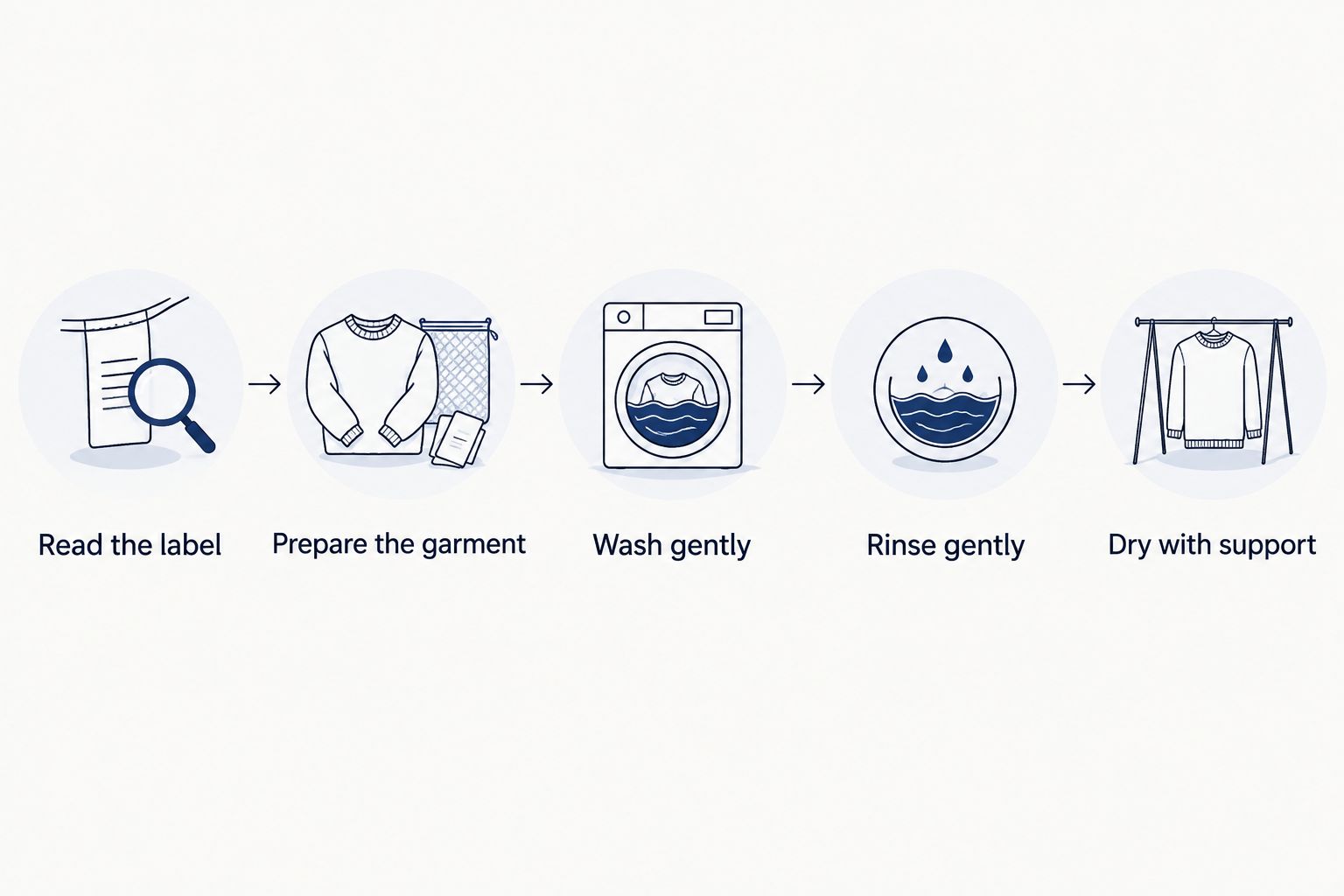
Follow the label, minimise pulling, and keep the wet garment supported. Use this sequence for a washable nightie, adjusting the washing and drying method to its own instructions.
1. Read the complete care label
Check the washing method, permitted temperature, drying instructions and ironing symbols before filling the bucket or machine. A cotton description does not tell you how every print, trim, fastening or stitched detail should be treated.
Look for a fibre-content label as well. Cotton blends and stretchy knitted fabrics need their own assessment; do not copy the routine from another nightie just because both feel soft.
2. Prepare the garment without tugging
Empty pockets, close suitable fastenings and check for loose stitching. Turn a printed garment inside out where appropriate, and separate it from items with exposed hooks or rough fastenings that can catch the fabric.
Treat a small stain with a product suitable for the garment, following that product's directions. Avoid scrubbing the same patch vigorously or pulling the cloth tight across your knuckles: concentrated rubbing can distort a small area even when the rest washes well.
3. Wash with gentle movement
For a hand-washable nightie, dissolve the appropriate detergent in water before adding the garment. Gently press the fabric through the water rather than twisting it into a rope or rubbing it hard against a washing surface.
If the label permits machine washing, select a suitable gentle programme and follow the machine's loading instructions. Do not pack the drum tightly; the garment needs space to move without being trapped among heavy items.
4. Rinse without wringing
Support the fabric while changing the rinse water. Press water through the garment gently and continue until detergent has been rinsed out.
Do not twist the sleeves, skirt or neckline to force water out. A nightie can look neatly wrung while its seams and edges have been pulled unevenly.
5. Lift, reshape and dry with support
Gather the wet garment and lift it with both hands underneath its weight. Press out excess water gently; where suitable, use a clean towel to absorb moisture without twisting.
Lay it on an appropriate drying surface, align the seams and smooth the neckline lightly. Follow any specific flat-drying, line-drying or tumble-drying instruction on the label rather than choosing a method by habit.
Hand washing or machine washing: which should you choose?
Choose the method the label allows, not the method that sounds gentlest. Hand washing gives you direct control over movement, but forceful rubbing and wringing defeat that advantage.
For a 2026 laundry checklist, keep the decision simple: care instructions first, then a method you can carry out without rough handling.
| Washing method | Best for | Practical advantage | Limitation |
|---|---|---|---|
| Gentle hand washing | Nighties labelled for hand washing | You control movement and support delicate areas | Rubbing, twisting and careless lifting can still distort fabric |
| Gentle machine washing | Nighties whose labels permit machine washing | Reduces manual handling during the wash | An unsuitable programme, crowded load or snagging item can damage the garment |
A laundry mesh bag can help keep a machine-washable garment away from snagging items, but it does not override the care label. It also does not make an unsuitable programme suitable.
Wash heavy household textiles separately from a lightweight nightie. Keeping towels and bulky bed linen out of the same load also makes it easier to sort garments by their actual care needs.
How should you remove water without stretching the fabric?
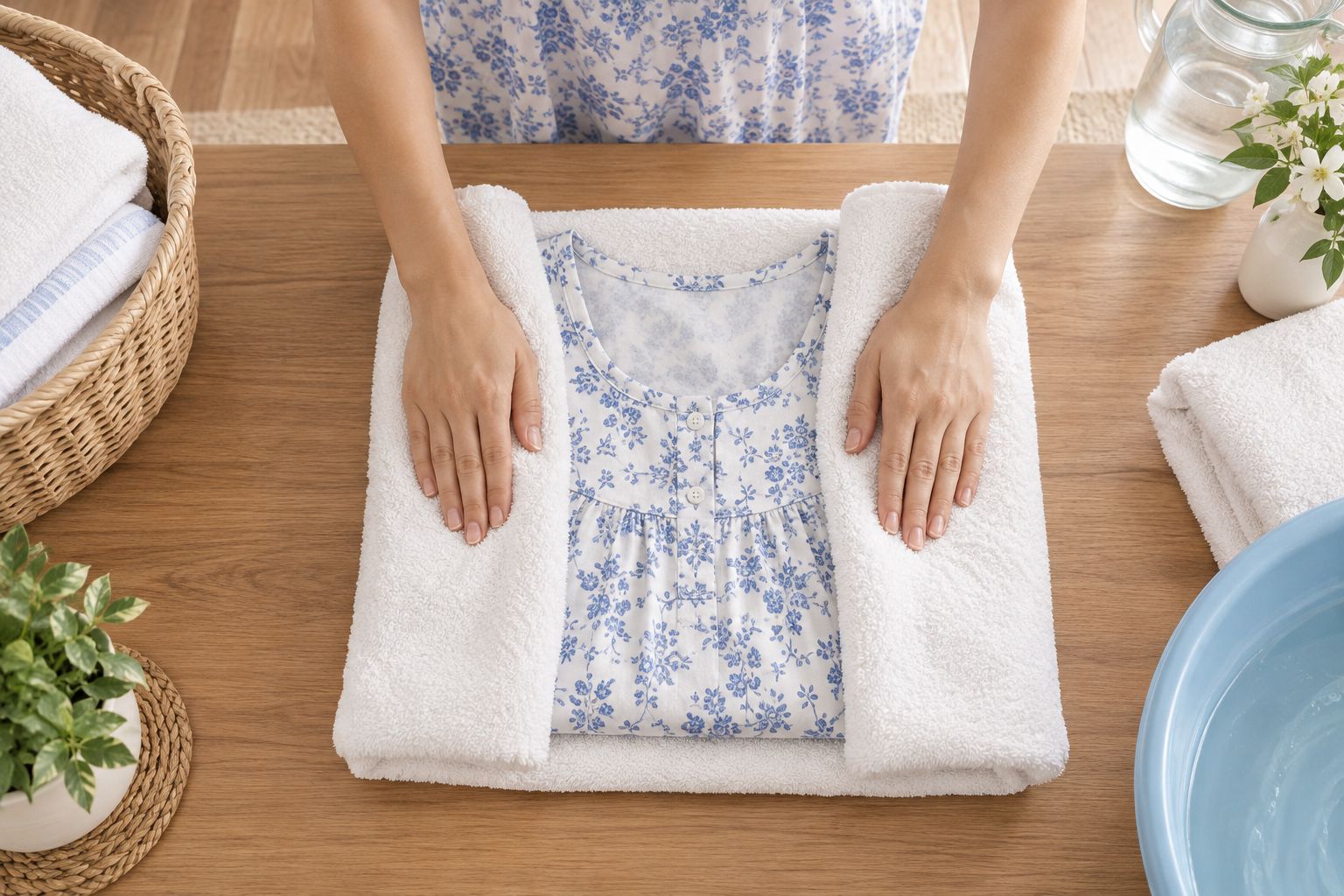
Press out water; do not wring it out. The aim is to remove excess moisture without making the neckline, sleeves or hem carry the garment's weight.
After rinsing, let loose water drain while the garment remains supported. Then place it on a clean, colourfast towel, fold or roll the towel around it gently, and press rather than twist.
Unroll it promptly and transfer it to the drying surface. Do not leave it bundled inside a damp towel, particularly when the room already feels humid.
If you use a machine spin, follow the garment instructions and select an appropriate setting. A harsher spin is not a substitute for having a suitable place ready for drying.
Why cotton nighties stretch or lose their shape
Several parts of the routine can change the fit. For your 2026 care notes, record what happens during washing and drying rather than assuming detergent is the only cause.
- Fabric construction: Knitted cotton has a different structure from woven cotton. Do not expect both to respond identically to pulling or washing.
- Wet weight: A soaked garment puts strain on the small area used to lift or hang it. Support the body of the nightie rather than just its shoulders.
- Twisting and rubbing: Forceful handling applies uneven tension, especially around seams, openings and thin areas.
- Drying position: Suspending a wet nightie from narrow straps or shoulder points concentrates its weight there.
- Details and mixed materials: Elastic, lace, embroidery and other trims can have different care needs from the main fabric.
- Repeated pulling: Tugging a damp hem straight or pulling a tight neckline over a hanger can add distortion after washing.
These factors also explain why a routine that suits one family member's nightie does not automatically suit another's. Check each garment separately, even when you wash them on the same day.
How do you dry cotton nighties during Kerala's rainy season?
Use airflow and support rather than pulling the garment into a faster-drying position. Set up the drying area before washing so a wet nightie does not sit in a heap while you look for space.
Where the label calls for flat drying, use a clean surface that allows air to circulate. Arrange the garment without bunching the sleeves underneath it, and check that a towel or support beneath it is not remaining soaked.
If line drying is permitted, avoid leaving the whole wet weight suspended from a narrow neckline or delicate shoulder section. Use a supported arrangement consistent with the label, and smooth folds without stretching them out.
For the 2026 monsoon routine, leave space between garments instead of crowding the rack. A fan can help move air around an indoor drying area; keep electrical equipment safely away from water and wet laundry.
Do not fold or store a nightie while the seams or thicker sections still feel damp. Check those areas separately from the lighter skirt fabric.
How can you tell whether a nightie has stretched?
Compare the garment only when it is fully dry and laid flat without tension. A wet nightie hanging on a line is not a useful reference for its finished fit.
For a simple 2026 fit record, note the following measurements in centimetres before the next wash:
- Body length: Measure from the same shoulder point to the hem each time.
- Chest width: Measure straight across the laid-flat garment at the same point below the armholes.
- Neck opening: Measure between consistent points without pulling the edge open.
Keep the measuring tape flat, not tight. A quick photograph of the measuring points helps you repeat the check consistently without marking the fabric.
If the dry length changes but the chest width does not, inspect how the garment was supported during drying. If the fit has changed throughout, review the care label, programme and drying method together rather than trying to correct one measurement by force.
Can you put a stretched cotton nightie back into shape?
A stretched nightie does not always return to its original dimensions. Gentle reshaping can help align fabric and seams, but it is not a guaranteed repair.
If the care instructions allow washing, use the approved method and smooth the damp garment back into a natural shape without pulling it beyond that position. Let it dry with suitable support, then assess the fit again.
Do not use a hot wash as a stretching repair. Shrinkage is not a controlled adjustment: the body, neckline, trims and seams need not change in the same way.
Avoid internet remedies that require soaking in products not intended for the garment. For persistent neckline distortion or damaged elastic, ask a tailor to assess whether an alteration is practical.
What should you check before buying your next everyday nightie?
Choose a garment whose care needs fit the laundry routine you can maintain. A nightie that requires careful hand washing needs that attention each time; a general cotton label is not permission to machine wash it.
Pulpel is best suited to family shoppers looking for clothing and home textiles together. When considering cotton nighties from Pulpel, check the individual listing for fabric, size measurements and care details rather than assuming that every garment has the same construction.
Comfort begins with the right fit, not with stretching a tight garment after purchase. Leave room for normal movement according to the garment's measurements, and avoid choosing a smaller size on the assumption that washing will loosen it.
FAQ
Can I wash cotton nighties in a washing machine?
Machine wash cotton nighties only when their care labels permit it. Use a suitable programme, avoid a tightly packed drum, and keep the garment away from snagging fastenings.
Is hand washing better for keeping a nightie's shape?
Hand washing gives you control over handling, but it is not automatically better. Gentle pressing helps; vigorous rubbing and wringing can distort the garment.
Should I hang a wet cotton nightie on a hanger?
Avoid hanging a water-heavy cotton nightie from its shoulders unless the care instructions specifically support that drying method. Concentrating the wet weight at the neckline and shoulders can pull those areas out of shape.
What temperature should I use for cotton nighties?
Use the washing temperature stated on the individual nightie's care label. Do not assume every cotton fabric, print, trim or blend tolerates the same temperature.
Can a hot wash fix a stretched cotton nightie?
A hot wash is not a reliable way to fix a stretched cotton nightie. It can change the fit unevenly and conflict with the garment's care instructions.
How do I stop a nightie neckline from stretching?
Avoid lifting, wringing or hanging the wet garment by its neckline. Support the body of the nightie and smooth the opening gently before drying it as instructed.
Can I wash a cotton nightie with bedsheets and towels?
Wash a lightweight cotton nightie separately from heavy towels and bulky bed linen. Sort by care instructions as well as colour, and keep loads free of items that can snag it.
One last thing
Prepare the drying space before you start the wash. A gentle wash cannot prevent distortion if you then carry a soaked nightie by its neckline or squeeze it onto an overcrowded rack.
For cotton nighties bought from Pulpel or already in your cupboard, the most useful habit is the same: support the wet fabric until its weight no longer pulls on the garment's edges.